Introduction
You fertilize on schedule. You water consistently. You treat weeds. And yet your lawn looks the same year after year. Maybe a little worse each season. You have tried different products, different companies, different schedules. Nothing seems to stick.
If this sounds familiar, soil compaction is almost certainly a major part of the problem. It is the hidden variable that makes everything else less effective. It does not show up on a bag of fertilizer or a weed control label. But it is working against every dollar you spend on your lawn.
Compaction is especially common in high-traffic lawns in Fayetteville and new construction lawns in Bentonville, where heavy equipment has packed the soil during the building process. It is a starting point problem that requires a direct solution before anything else you do will fully work.
What Soil Compaction Actually Is
Healthy soil is not solid. It is approximately 50 percent solid material and 50 percent pore space. Those pores hold air, water, and the biological activity that makes nutrient exchange possible. Grass roots grow through those pores, pushing downward to reach water and anchor the plant.
Compaction occurs when those pore spaces are collapsed by external pressure. The soil particles are forced together until there is little to no space between them. The result is a dense, nearly impermeable layer that water cannot penetrate, roots cannot grow through, and nutrients cannot travel into.
From the surface, the lawn may still look like a lawn. But below the ground, the root system is shallow, starved, and unable to access what it needs to survive stress, disease, or drought.
Why Compaction Is So Common in Northwest Arkansas
The soil across much of Northwest Arkansas is high in clay content. Clay particles are flat and pack tightly when compressed, making our native soils significantly more prone to compaction than sandy or loam soils found in other regions.
On top of the clay issue, many properties in Bentonville and the surrounding area are relatively new construction. When homes are built, heavy equipment drives over the yard repeatedly during the construction process. By the time sod or seed is laid, the soil is already severely compacted. Homeowners inherit a compaction problem before the lawn has even had a chance to establish.
Foot traffic, vehicle traffic on soft ground, repeated mowing, and heavy rainfall all add to compaction over time. Without aeration to relieve it, the problem compounds every season.
How to Know If Your Soil Is Compacted
You do not need special equipment to test for compaction. Here are the most reliable indicators:
- Screwdriver test: push a standard screwdriver into the lawn. If it takes significant force to penetrate two to three inches, compaction is present
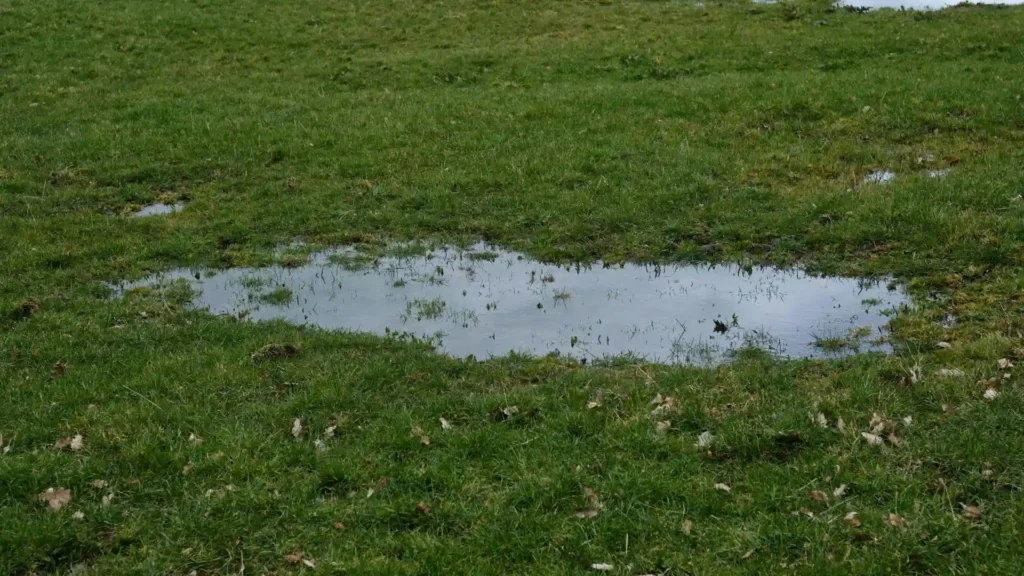
- Water pooling: rain or irrigation pools on the surface instead of soaking in within a few minutes
- Fertilizer not working: regular fertilization produces little visible improvement in color or density
- Thin or patchy turf: grass is sparse in areas that get regular foot or equipment traffic
- Excessive weed pressure: weeds thrive in compacted soil because they are more stress-tolerant than grass
What Compaction Does to Your Lawn Over Time
Compaction is a compounding problem. The longer it goes unaddressed, the worse its effects become.
In year one, roots stay shallow but the lawn may still look acceptable in spring and fall. In year two, summer stress is more pronounced as shallow roots cannot access subsoil moisture. Fertilization produces diminishing returns. Weeds begin moving into thin spots. By year three, the lawn is noticeably thinner, weedier, and harder to manage regardless of what treatments are applied.
The core problem is that without proper aeration, nutrients cannot effectively reach the root system. Fertilizer applied to compacted soil simply has nowhere to go. It sits on the surface, washes off, or causes burn. Liquid fertilizer fares slightly better but still cannot penetrate deeply compressed clay. Every application is a partial waste until compaction is addressed.
Core Aeration: The Direct Fix for Compacted Soil
Core aeration is the only service that directly addresses compaction. Spike aeration and other alternatives push soil aside rather than removing it, which can actually increase compaction around the holes. Core aeration physically removes plugs of soil, creating open channels throughout the root zone.
Those channels immediately improve water infiltration, oxygen exchange, and the ability of fertilizer to penetrate to the roots. Root tips that have been stopped by compaction can now grow through the loosened zones around each hole. The improvement is not cosmetic. It is structural and fundamental.
For Northwest Arkansas clay soils, we recommend core aeration at least once per year in the fall for tall fescue lawns. Severely compacted properties, particularly new construction lawns in Bentonville or high-traffic lawns in Fayetteville, often benefit from two passes per year until soil structure improves.
Why Fixing Compaction Makes Everything Else Work Better
Aeration is the service that unlocks the full value of everything else you invest in your lawn.
Lawn fertilization applied immediately after aeration moves directly into the root zone through the open holes rather than sitting on the surface. Studies consistently show nutrient uptake is significantly higher when fertilizer follows aeration. Weed control works better because thick, deep-rooted turf naturally crowds weeds out. Overseeding produces dramatically higher germination rates because seed falls into the aeration holes and has direct soil contact.
This is why at 1st Impressions Lawn and Tree, aeration is never offered as a standalone event. It is the foundation of a complete lawn care program that integrates fertilization, weed control, and overseeding into a connected seasonal system.
Frequently Asked Questions
How deep does soil compaction go?
Compaction is most severe in the top two to four inches of soil but can extend deeper on properties with heavy equipment history or years of neglect. Core aeration tines typically penetrate two to three inches, directly addressing the most damaging compaction layer.
Can I fix compaction myself?
Rental core aerators are available but are significantly heavier and harder to operate than professional equipment. Coverage is often uneven on rental machines, and the tine depth and spacing may not match professional standards. Professional aeration ensures consistent hole depth and pattern across the entire lawn.
How quickly will the lawn improve after aeration?
Water infiltration improves immediately. Visible turf improvement, particularly when combined with overseeding and fertilization, typically appears within four to six weeks. Soil structure improvement builds over one to two seasons of consistent care.
Will topdressing help with compaction?
Topdressing with compost after aeration can help improve soil biology and structure over time, particularly on heavy clay soils. It works alongside aeration rather than replacing it. Aeration should always come first.
Does new construction always cause compaction?
In almost every case, yes. Heavy equipment during construction compresses the soil to a degree that normal lawn care cannot overcome without active intervention. If your lawn was established on a new construction property and has never been aerated, compaction is almost certainly present.
How do I know if my Rogers lawn has compaction issues?
The screwdriver test is the fastest check. If you also notice water pooling, fertilizer not working, or persistent thin spots in your Rogers lawn despite regular care, schedule a professional assessment. Compaction is almost always present in these situations.
Conclusion
Soil compaction is not a dramatic problem. It does not announce itself. It just quietly prevents your lawn from responding to everything you do for it until the gap between your effort and your results becomes impossible to ignore.
The fix is straightforward but must be done right. Core aeration, timed correctly and followed by fertilization and overseeding, breaks the cycle. Once compaction is relieved, the lawn can finally use what you give it. Results follow.
At 1st Impressions Lawn and Tree, we build every complete lawn care plan around compaction relief as the first step for any lawn that is not responding to standard treatments. We serve homeowner?
s across Rogers, Bentonville, Springdale, Fayetteville, and the surrounding Northwest Arkansas area.
If your lawn has stopped responding, contact 1st Impressions Lawn and Tree for a free assessment. We will find out why and fix it.