Introduction
You mow it. You water it. You fertilize it. And your lawn still looks like it is losing a war.
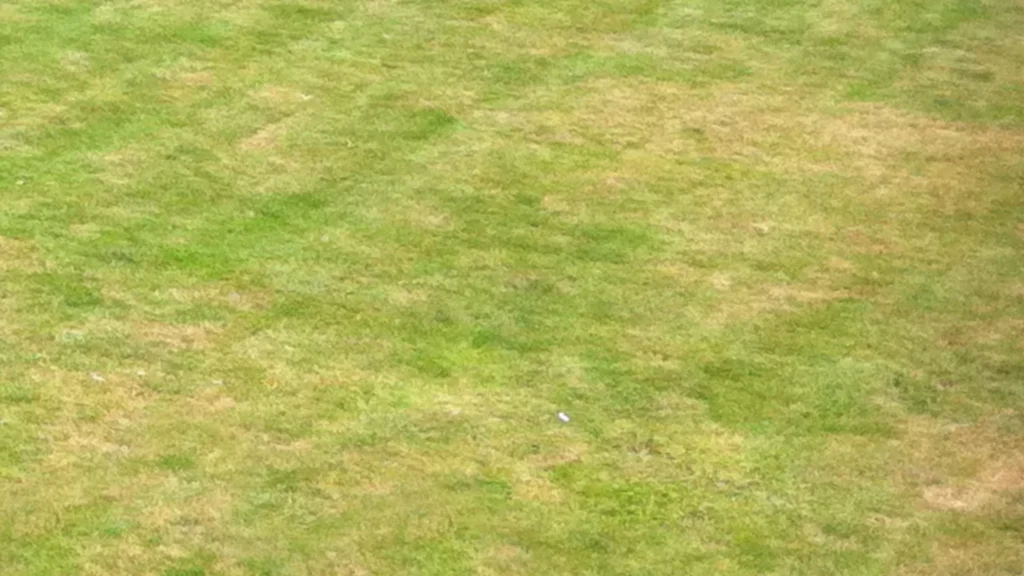
Bare spots. Thin patches. Grass that looks tired and sparse no matter what you do. It is one of the most frustrating things a homeowner can deal with, especially when the neighbor’s lawn looks lush and full with apparently no extra effort.
The truth is, thin and patchy grass does not happen randomly. There are specific, identifiable causes behind it. And once you know what those causes are, fixing the problem becomes straightforward. This guide will walk you through every reason lawns go thin in Northwest Arkansas and exactly what it takes to build a lawn that fills in and stays full.
Cause 1: Soil Compaction Is Strangling Your Grass Roots
This is the most common cause of thin, patchy grass in our service area, and it is the one most homeowners never identify.
Compacted soil has no space between the particles for air, water, or nutrients to move through. Grass roots need all three to grow deep and strong. When the soil is packed tight, roots stay shallow. Shallow roots cannot access moisture during dry stretches, cannot anchor the plant effectively, and cannot absorb the fertilizer you apply. The result is thin, stressed grass that looks patchy even in areas where seed is present.
Northwest Arkansas has a high percentage of clay in its native soil, which makes compaction a near-universal problem. If you have not aerated your lawn in the past year, compaction is almost certainly a factor in why your turf looks the way it does.
Core aeration is the direct fix. It removes plugs of soil to open the ground up and give roots room to grow. When paired with overseeding and fertilization, aeration can transform a struggling lawn within a single fall season.
Cause 2: Your Lawn Has Never Been Overseeded
Grass plants age. Turf that was established 10 or 15 years ago without any overseeding gradually thins out as individual grass plants die and are not replaced.
Many homeowners assume that healthy grass spreads on its own to fill in bare areas. That is true for some warm-season grasses like bermuda, which spread by runners. But tall fescue, the most common turf in Northwest Arkansas, is a bunch-type grass. It grows in clumps and does not spread laterally. If a section of fescue dies, that spot stays bare unless new seed is introduced.
Overseeding in fall, ideally right after aeration, is the solution. The aeration holes give new seed direct contact with soil, which dramatically improves germination rates. When we overseed immediately after core aeration at 1st Impressions Lawn and Tree, germination rates are consistently far higher than broadcast seeding on unbroken ground.
Cause 3: Mowing Too Short Is Thinning Your Turf
Cutting your grass too short is one of the fastest ways to thin out a lawn, and most homeowners do not realize they are doing it.
When grass is cut too low, it loses the leaf surface area it needs for photosynthesis. Less photosynthesis means less energy to grow, defend against disease, and compete with weeds. Scalped grass also exposes the soil to direct sunlight, which heats the ground and stresses the root zone. Weeds, which are adapted to survive in harsh conditions, take advantage of the open space.
For tall fescue in Northwest Arkansas, never cut below 3.5 inches. During the heat of summer, raise the mower deck to 4 inches or higher. Taller grass shades the soil, retains moisture, and stays more competitive against weeds.
Cause 4: Shade Is Preventing Full Coverage
Shaded areas of a lawn almost always look thinner than the open areas, and that is not a coincidence.
Most standard turfgrasses need four to six hours of direct sunlight per day to thrive. When trees, structures, or fences block light, the grass weakens. It becomes more susceptible to disease, moss, and weed invasion. Even if you seed heavily in shaded areas, the grass may germinate and then thin out over time as the plants do not get enough light to sustain themselves.
In heavy shade, the solution is either trimming canopy to improve light penetration or transitioning to a shade-tolerant seed blend. Fine fescue varieties handle shade significantly better than standard tall fescue. In extreme cases, ground cover alternatives may be a better long-term option than trying to maintain turf in areas with less than three hours of sunlight daily.
Cause 5: Disease, Grubs, or Pest Damage
Not all thin patches are caused by cultural problems. Sometimes the grass is being actively damaged by something below or on the surface.
Signs to look for:
- Circular or irregular brown patches that expand outward: likely a fungal disease such as brown patch or dollar spot
- Grass that pulls up easily from the soil like a loose carpet: grub damage below the surface eating roots
- Patches that appear in high-traffic areas and look worn: compaction and physical damage
- Yellowish patches with a cottony or thread-like appearance: fungal disease encouraged by excess moisture
If you are seeing any of these patterns, the fix starts with a proper diagnosis. Overseeding into an active disease or pest problem will not produce results. The underlying issue has to be addressed first.
The Fix: A Complete Lawn Recovery Plan
A thin, patchy lawn rarely has just one cause. Usually it is a combination of compaction, aging turf, and inconsistent care layered on top of each other over several years. That is why single-service fixes rarely produce lasting results.
At 1st Impressions Lawn and Tree, the lawn recovery program we recommend for thin and patchy turf in Northwest Arkansas follows this sequence:
- Soil assessment to identify compaction, pH issues, and nutrient deficiencies
- Core aeration to break up compaction and open the soil
- Overseeding immediately after aeration for maximum germination
- Starter fertilizer to feed new seedlings as they establish
- Seasonal follow-up fertilization to sustain the recovery
- Weed control timed to protect the new seedlings without disrupting germination
Done correctly in fall, this program produces visible results within four to six weeks and delivers a dramatically thicker lawn by the following spring.
Frequently Asked Questions
Why does my lawn have bare spots that will not fill in?
Bare spots that will not fill in are almost always caused by a combination of compaction, missing seed (tall fescue does not self-spread), disease, or grub damage. Each cause requires a different fix, starting with proper identification.
When is the best time to overseed in Northwest Arkansas?
For tall fescue, the best overseeding window is late August through mid-October. Soil temperatures are cooling, there is less weed competition, and the grass has time to establish before winter dormancy.
Can a thin lawn be fixed without overseeding?
Sometimes, yes. If the thinning is caused entirely by compaction or nutrient issues and the existing grass plants are still present, aeration and fertilization can thicken the lawn without new seed. But if plants have died and left true bare spots, overseeding is necessary.
How long does it take to fix a patchy lawn?
With a complete program of aeration, overseeding, and fertilization started in fall, most homeowners see significant improvement within 4 to 8 weeks. Full recovery to a dense, uniform lawn typically takes one full growing season.
Why does my lawn look patchy in summer but okay in spring?
Summer heat stress exposes weaknesses in shallow-rooted turf. Grass that looks acceptable in spring can thin dramatically in July and August when roots cannot access moisture deep in the soil. Compaction is almost always the underlying cause.
Does fertilizing help a thin lawn?
Fertilization helps feed existing grass but will not fill in true bare spots on its own. For thin lawns, fertilization works best as part of a complete program that includes aeration and overseeding.
Conclusion
A thin, patchy lawn is not a permanent condition. It is the result of identifiable problems that have built up over time, and every one of them is fixable with the right approach.
The key is stopping the guesswork. Treating symptoms without diagnosing the cause is why so many homeowners fertilize and overseed year after year without seeing a lasting difference. Compaction, aging turf, mowing habits, shade, and pest damage all require different responses.
At 1st Impressions Lawn and Tree, we start every recovery program with a proper lawn assessment so we know exactly what we are dealing with before we make a single recommendation. If your lawn in Rogers, Bentonville, Springdale, or Fayetteville has been looking thin and patchy, we can help you figure out why and build a plan that actually solves it.
Stop settling for a lawn you are embarrassed about. Reach out to 1st Impressions Lawn and Tree for a free assessment and let us put together a recovery plan built for your specific lawn.