Introduction
Northwest Arkansas is a great place to live. Rolling terrain, mature trees, mild winters, and a community that takes pride in their properties. But the climate and soil conditions here create a specific set of lawn challenges that homeowners across Rogers, Bentonville, Springdale, and Fayetteville deal with year after year.
Hot, humid summers stress cool-season grasses. Clay-heavy native soil compacts aggressively. Weed species thrive in the transitional climate. Disease pressure peaks in late summer. And tall fescue, the dominant grass type in our area, requires specific care that generic lawn programs were not designed to provide.
At 1st Impressions Lawn and Tree, we diagnose and treat these five problems every single week across our service area. Here is what we see, why it happens, and exactly how to fix it.
Problem 1: Clay Soil Compaction
What It Looks Like
Water pools on the lawn after rain instead of soaking in. The soil feels rock-hard when you push a screwdriver into it. Fertilizer does not seem to produce results no matter how often you apply it. Grass looks stressed even when irrigation is consistent.
Why It Happens Here
Northwest Arkansas sits on a limestone and shale bedrock base covered by a thin layer of clay-heavy topsoil. That clay compacts faster than sandy or loam soils and holds compaction longer. Regular foot traffic, mowing, and rainfall all add to compaction year after year. Without active intervention, clay soil in our region becomes nearly impermeable over time.
How to Fix It
Core aeration is the primary fix. For lawns with severe compaction, a double-pass aeration in fall, running the machine in two perpendicular directions, creates significantly more relief than a single pass. Follow with fertilization immediately after aeration to drive nutrients through the open channels while they are available. Lawns with extreme compaction may benefit from topdressing with compost to improve soil structure over time.
Problem 2: Summer Heat Stress on Tall Fescue
What It Looks Like
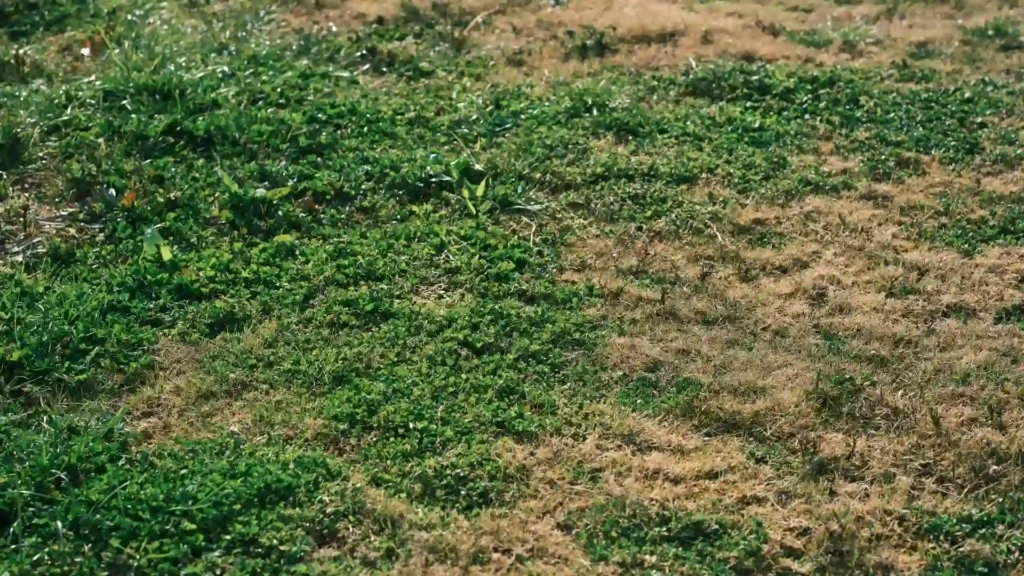
Grass turns brown or straw-colored in July and August. Thin patches appear in areas that were green in spring. The lawn does not recover between waterings. Some areas look nearly dormant even with irrigation running.
Why It Happens Here
Tall fescue is a cool-season grass. It thrives in the 60 to 75 degree range and goes into survival mode when temperatures consistently exceed 90 degrees. Northwest Arkansas summers routinely push into the mid to upper 90s for weeks at a time. This is outside the comfortable growth zone for fescue, and shallow-rooted turf is the first to show the damage.
How to Fix It
The long-term fix is building deep roots before summer arrives. Annual fall aeration breaks up compaction so roots can grow deeper over winter. Deep roots access subsoil moisture during drought and give the plant the reserves it needs to survive heat stress. In the short term, raise your mower deck to 4 inches during summer to shade the soil and reduce heat absorption. Water deeply and infrequently rather than shallow and daily. Avoid fertilizing with high nitrogen in summer, which pushes top growth the plant cannot sustain.
Problem 3: Persistent Weed Pressure
What It Looks Like
Weeds return every season despite regular treatment. Crabgrass takes over sunny areas in summer. Dandelions and clover spread through thin spots in spring and fall. Nutsedge appears in wet or low-lying areas. Weed control products seem to work temporarily but never eliminate the problem.
Why It Happens Here
Northwest Arkansas has a transitional climate that supports both cool-season and warm-season weed species. That means there is essentially no off-season for weed pressure. Winter annuals germinate in fall, summer annuals germinate in spring, and perennial weeds come back year after year from established root systems. A lawn with any thin areas or compaction gives all of these species an easy foothold.
How to Fix It
Effective weed control in Northwest Arkansas requires a four to six application seasonal program with both pre-emergent and post-emergent treatments timed to the specific weed cycles in our area. Pre-emergent in late February stops crabgrass before it germinates. A fall pre-emergent in September stops winter annuals. Post-emergent broadleaf treatments address active weeds in spring and fall. The turf itself must also be kept thick through fertilization and overseeding so weeds have less open ground to colonize.
Problem 4: Brown Patch Fungal Disease
What It Looks Like
Circular or irregularly shaped brown patches appear in the lawn, typically in late July through September. The patches range from a few inches to several feet in diameter. Affected grass blades show tan lesions with a darker border. Patches may expand rapidly during hot, humid periods. The surrounding grass looks healthy, which makes the affected areas stand out sharply.
Why It Happens Here
Brown patch is caused by the fungus Rhizoctonia solani, and it thrives in exactly the conditions Northwest Arkansas produces in late summer: high humidity, nighttime temperatures above 70 degrees, and wet turf from irrigation or rain. Tall fescue is particularly susceptible. Lawns that are over-fertilized with nitrogen in summer, watered at night, or have poor drainage are at significantly higher risk.
How to Fix It
Active brown patch requires a fungicide application to stop the spread. Contact fungicides provide fast knockdown. Systemic fungicides provide longer protection. Cultural changes are equally important: water in the early morning so turf dries during the day, avoid high-nitrogen summer fertilization, and improve drainage where possible. Affected areas will need overseeding in fall once disease pressure subsides. Preventive fungicide applications in June and July can protect high-risk lawns before disease appears.
Problem 5: Thinning Turf from Overdue Overseeding
What It Looks Like
The lawn gradually loses density year over year. Bare spots appear and do not fill in. The grass looks less uniform than it did several years ago. Some areas look sparse even after fertilization and weed control. The overall color and texture of the turf is uneven across the yard.
Why It Happens Here
Tall fescue is a bunch-type grass, meaning it grows in clumps and does not spread laterally to fill bare areas. Every season, some grass plants die from heat stress, disease, drought, or age. Without regular overseeding, those plants are never replaced and the lawn gradually thins. Most lawns in Northwest Arkansas that have not been overseeded in three or more years are noticeably thinner than they should be, even if they are receiving regular fertilization and weed control.
How to Fix It
Annual overseeding in fall, timed with core aeration, is the solution. The aeration holes provide ideal seed-to-soil contact and dramatically improve germination rates. A quality tall fescue blend suited to our climate should be selected. Starter fertilizer applied at seeding feeds new seedlings as they establish. Within four to six weeks of a properly executed fall overseeding program, thin and bare areas begin to fill in noticeably.
The Common Thread Behind All Five Problems
Every one of these problems is either caused by or made significantly worse by the absence of a consistent, seasonal lawn care program. Compaction builds when aeration is skipped. Heat stress worsens when roots are shallow from years of compaction. Weed pressure increases when turf is thin from skipped overseeding. Disease spreads faster in stressed, poorly maintained lawns.
The homeowners who deal with these problems the least are not the ones who spend the most money on reactive treatments. They are the ones who run a consistent program that addresses the root causes before problems escalate. Aeration in fall. Fertilization on schedule. Overseeding every year. Weed control applied pre-emergent before weeds appear.
That is the standard of care we bring to every property we manage at 1st Impressions Lawn and Tree, and it is what separates lawns that constantly struggle from lawns that consistently look the way homeowners want them to.
Frequently Asked Questions
What grass type is best for Northwest Arkansas?
Tall fescue is the most widely used and best-adapted cool-season grass for Northwest Arkansas. It handles our transitional climate better than most alternatives, though it does require active management through summer heat.
When is the best time to treat lawn problems in Northwest Arkansas?
Fall, from late August through October, is the most important window for lawn recovery in our area. Aeration, overseeding, and fertilization in fall produce the highest returns of any time of year for tall fescue lawns.
How do I know if my lawn has brown patch or just heat stress?
Heat stress tends to affect the lawn more uniformly, with widespread browning across open areas. Brown patch creates distinct circular or irregular patches with sharper edges and often shows blade lesions with tan centers and darker borders on affected grass. If you are unsure, a professional diagnosis will confirm which problem you are dealing with.
Can I fix all five problems in one season?
In many cases, yes. A well-executed fall program of aeration, overseeding, fertilization, and pre-emergent weed control addresses compaction, thinning turf, and weed pressure simultaneously. Disease and heat stress prevention are built in through cultural practices that carry into the following season.
Is it worth hiring a professional lawn care company in Northwest Arkansas?
For most homeowners, yes. The timing, product selection, and application precision required to manage all five of these problems correctly is difficult to execute without professional experience and equipment. The cost of a professional program is typically offset by avoiding the repeated expense of reactive treatments that do not solve the underlying causes.
Does 1st Impressions Lawn and Tree serve the entire Northwest Arkansas area?
Yes. We serve homeowners in Rogers, Bentonville, Springdale, Fayetteville, and surrounding communities throughout the Northwest Arkansas area. Contact us to confirm service availability at your address.
Conclusion
Northwest Arkansas lawns face a specific set of challenges that require a specific approach. Generic lawn care advice built for northern or southern climates misses the mark here. The transitional climate, clay soil, and summer heat demand a program that is built around what actually happens in our area across the full growing season.
The five problems covered in this guide, compaction, heat stress, weed pressure, brown patch, and thinning turf, are all manageable when addressed proactively with the right services at the right time. The homeowners who see the best results are the ones who stop reacting to problems after they appear and start preventing them before they do.
At 1st Impressions Lawn and Tree, we have built our entire lawn care program around these specific NWA challenges. If your lawn is dealing with any of these problems right now, we can help you diagnose exactly what is going on and build a plan to fix it.
Tired of fighting the same lawn problems every year? Contact 1st Impressions Lawn and Tree for a free lawn assessment and let us build a program designed specifically for Northwest Arkansas conditions.