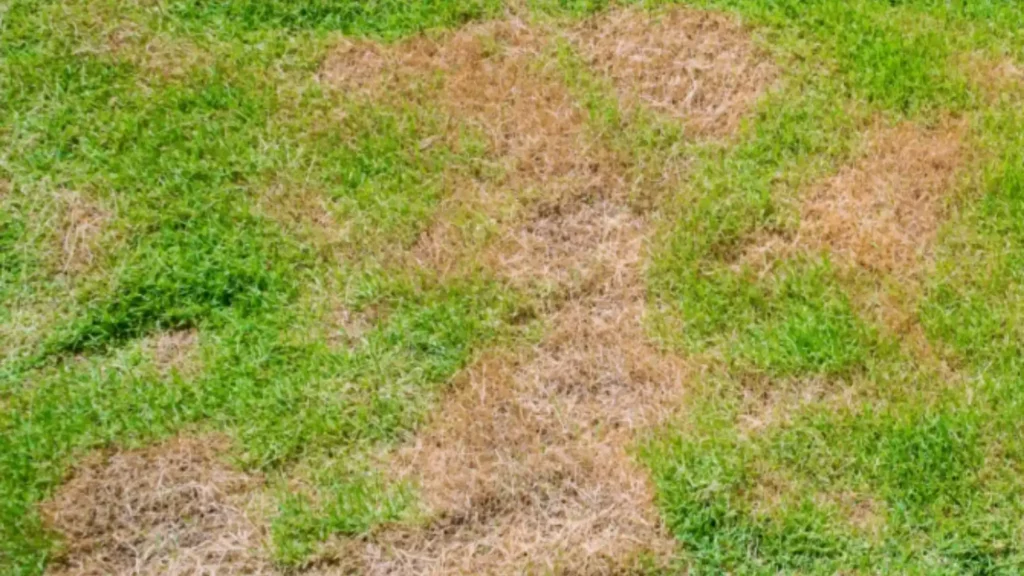
Why This Happens
Summer is the highest-stress period of the year for tall fescue lawns in Northwest Arkansas. Temperatures regularly push into the mid-90s, which is above the comfortable growth range for cool-season grass. Humidity stays high, nights stay warm, and irrigation systems often cannot fully compensate for the combination of heat, evaporation, and shallow root access to soil moisture.
These stress conditions create two simultaneous problems. First, heat and drought stress directly browns the grass as plants reduce top growth to conserve resources. Second, the warm, humid nights create ideal conditions for Rhizoctonia solani, the fungus that causes brown patch, to spread rapidly through the turf.
The two problems look similar from a distance, and both appear in July and August. But they have different visual patterns, different distributions across the lawn, and critically, require opposite responses. Heat stress benefits from deeper watering. Active brown patch is worsened by additional moisture.
What Most Homeowners Get Wrong
The single most common mistake is increasing irrigation when brown patches appear in summer. If the brown patches are being caused by brown patch fungal disease rather than drought, more water is exactly the wrong response. Brown patch spreads through wet turf, particularly when moisture persists overnight. Increasing irrigation in response to fungal disease accelerates the spread.
The second mistake is diagnosing all summer browning as fertilizer deficiency and applying a nitrogen treatment. High-nitrogen fertilization in summer pushes soft, rapid growth that is highly susceptible to fungal attack. Applying nitrogen to an actively diseased lawn feeds the conditions the pathogen thrives in.
The third mistake is doing nothing because summer browning is expected. Some browning on tall fescue in Northwest Arkansas summers is normal and expected. Active brown patch disease is not. The difference between normal semi-dormancy and disease damage matters because disease expands and kills plants, while dormancy is temporary and reverses when temperatures drop.
What Actually Works
For active brown patch: apply a systemic fungicide early in the day. Stop evening or nighttime irrigation immediately and switch to morning-only watering so turf dries completely during the day. Avoid nitrogen applications. The affected areas will remain brown until the disease stops spreading and new growth fills in, typically when temperatures drop in September. Plan for overseeding those areas in fall.
For heat and drought stress: check irrigation coverage and depth. Run the screwdriver test to confirm water is actually penetrating to the root zone. If water is only reaching two inches or less, compaction may be preventing absorption. If coverage is the issue, adjust irrigation heads or timing.
For both problems long term: the best prevention is a healthy root system built through annual fall aeration and fertilization. Deep roots access subsoil moisture during heat stress and give the plant the energy reserves to resist disease pressure. Lawns with deep, healthy roots show significantly less summer damage under the same conditions that devastate shallow-rooted turf.
How This Applies in Northwest Arkansas
Northwest Arkansas summers, particularly July and August in the Fayetteville, Rogers, Bentonville, and Springdale area, are consistently hot and humid enough to trigger brown patch in susceptible lawns. The humidity level in our region is higher than many homeowners expect, and nighttime temperatures in summer regularly exceed the 70-degree threshold that triggers rapid brown patch development.
Shaded Fayetteville lawns are at highest risk because canopy cover reduces airflow and keeps turf wet longer after rain or irrigation. These properties benefit from preventive fungicide applications in June and early July before disease conditions peak.
Properties across all four NWA cities that have been consistently aerated show lower disease incidence because improved soil drainage reduces the surface moisture conditions that favor fungal growth. A complete lawn disease treatment program combined with good cultural practices, morning irrigation, no summer nitrogen, proper mowing height, is the most effective combination.
Get a Lawn Care Plan That Works
At 1st Impressions Lawn and Tree, we diagnose summer brown patches before recommending treatment because the difference between disease and heat stress determines the entire response. A complete lawn care program that includes disease monitoring and preventive fungicide applications in high-risk seasons is what keeps summer damage manageable.
Seeing brown patches this summer? Contact 1st Impressions Lawn and Tree for a professional diagnosis and treatment plan across Northwest Arkansas.