Introduction
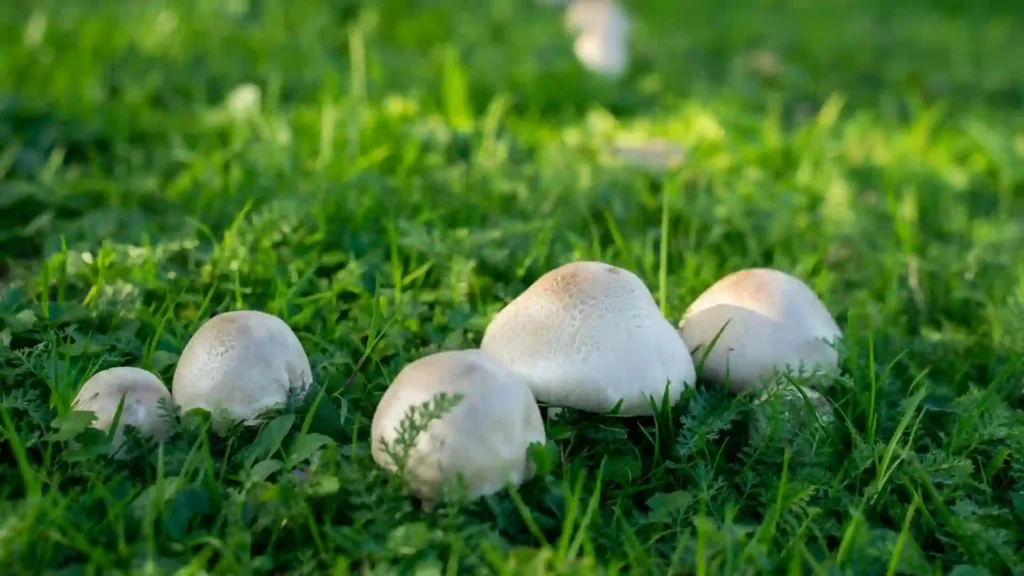
You walk out to your yard one morning and there they are. A cluster of mushrooms that was not there yesterday, standing in the middle of your otherwise normal lawn. Or maybe they are scattered along a curved line. Or appearing in the same spot every time it rains.
Mushrooms in a lawn alarm a lot of homeowners, especially when they appear suddenly and in numbers. The good news is that in most situations, mushrooms are not a sign that something is seriously wrong with your grass. The less good news is that they are telling you something about what is happening in the soil beneath your turf, and that is worth understanding.
What Mushrooms Actually Are
A mushroom is not a plant. It is the fruiting body of a fungal organism that lives in the soil. The actual fungus is a network of thread-like structures called mycelium that breaks down organic material underground. The mushroom that pops up in your yard is essentially the reproductive structure, similar in function to a flower or a fruit, produced when conditions are right for the fungus to spread its spores.
The fungal network itself can live underground for years without producing visible mushrooms. When you see them appear, it means the conditions of moisture, temperature, and food source have aligned to trigger reproduction.
Common Reasons Mushrooms Appear in Lawns
Decomposing organic material underground: The most common reason for persistent mushrooms in a specific area is buried organic matter. Old tree roots, a stump that was ground down years ago, construction lumber buried during home building, or accumulated thatch can all serve as a food source for soil fungi. The mushrooms keep coming back because the food source is still there.
Excess moisture and poor drainage: Fungi thrive in moist conditions. Lawns with drainage problems, low spots that hold water, heavy clay soil that stays saturated, or irrigation schedules that keep the soil consistently wet create ideal conditions for fungal growth. If your mushrooms appear after rain or in areas that stay wet, drainage and moisture management are the issue.
Fairy rings: If your mushrooms are growing in a curved line or a full circle, you have a fairy ring. This is a specific fungal growth pattern where the mycelium expands outward in a ring from a central point. Fairy rings can be superficial and harmless, or they can create a hydrophobic layer in the soil that repels water and causes the grass above to thin or die. The dark green ring of grass that often accompanies a fairy ring is caused by nitrogen released as the fungus breaks down organic matter.
Heavy thatch buildup: Thatch is the layer of organic debris between the soil surface and the grass blades. When it becomes thick enough, it becomes a food source for soil fungi. Lawns with thatch buildup of more than half an inch are more prone to mushroom growth, especially after wet stretches.
Are Mushrooms Dangerous to My Lawn?
In most cases, no. The fungal networks that produce common lawn mushrooms are saprophytic, meaning they feed on dead organic matter rather than living plant tissue. They are actually part of the decomposition process that returns nutrients to the soil.
The exceptions involve fairy rings that create water-repellent soil layers and certain aggressive fungal species that can compete with turf in specific conditions. If you notice a ring of dead or dying grass associated with your mushrooms, or if the turf in that area is thinning without another obvious explanation, a professional assessment is worth getting.
Are Lawn Mushrooms Dangerous to People or Pets?
This is where you need to exercise real caution. Many common lawn mushrooms are harmless, but some species that grow in residential yards are toxic if eaten. Without expert identification, you cannot tell a dangerous mushroom from a harmless one by appearance alone.
If you have children or pets who spend time in the yard, the safest approach is to remove mushrooms as soon as they appear. They can be knocked down with a rake or removed by hand with gloves. Removing them does not eliminate the fungal network underground, but it reduces exposure risk on the surface.
How to Reduce Mushroom Growth
Since mushrooms are a symptom rather than a problem in themselves, the most effective approach is addressing the underlying conditions.
- Improve drainage: If mushrooms appear consistently in low spots or wet areas, addressing the drainage issue reduces the moisture that fungi need. This may involve grading, French drains, or adjusting irrigation schedules.
- Remove the food source: If mushrooms are appearing over a buried stump or root system, excavating the material removes what the fungus is feeding on. This is the only permanent fix for that type of persistent growth.
- Reduce thatch: Aeration and dethatching reduce the organic layer that feeds soil fungi. This is also one of the best things you can do for overall lawn health.
- Adjust irrigation: Watering less frequently but more deeply encourages deeper root growth and reduces the surface moisture that supports fungal reproduction.
- Improve air circulation: Turf in shaded, poorly circulated areas stays moist longer. Selective tree trimming can help increase airflow and dry out the surface faster after rain.
Frequently Asked Questions
Q: Will mushrooms go away on their own?
A: The visible mushrooms will die back on their own, usually within a few days. But if the underlying food source or moisture condition is still present, they will return whenever conditions are right again. Removal of the mushroom does not remove the fungal network.
Q: Can I use fungicide to kill lawn mushrooms?
A: Fungicides are generally not effective against the type of soil-dwelling fungi that produce lawn mushrooms. They work better against surface fungal diseases that attack living turf. For mushroom problems, addressing the source is more effective than chemical treatment.
Q: My mushrooms grow in a circle every year. Is that a problem?
A: That is a fairy ring. It may be cosmetic only, or it may be causing a hydrophobic soil layer that is affecting turf health. Check whether the grass inside or along the ring is thinning, and whether water beads on the soil surface rather than soaking in. If so, professional treatment including aeration and soil surfactants can help break up the water-repellent layer.
Q: Why do mushrooms appear in the same spot every time it rains?
A: There is almost certainly buried organic material in that location, a root, stump, or piece of construction debris, that the fungal network is feeding on. The moisture from rain triggers fruiting. Excavating and removing the buried material is the long-term fix.
Q: Should I be worried about mushrooms near my trees?
A: Mushrooms growing at the base of a tree or along surface roots can sometimes indicate a wood-decay fungus that is breaking down the tree’s root system. If you see mushrooms consistently at the base of a tree combined with signs of tree stress like leaf loss or dead branches, have an arborist evaluate the tree.
Q: How do I keep my kids and dogs away from lawn mushrooms?
A: Remove them promptly with gloves as soon as they appear. Check the yard regularly after rain during warm, wet periods when fungal growth is most active. Teach children not to touch or eat anything growing in the yard without asking an adult first.
Conclusion
Mushrooms in your lawn are not typically a cause for alarm, but they are worth paying attention to. They signal the presence of decomposing organic material, excess moisture, or a fungal network that has found ideal conditions in your soil.
In most cases the mushrooms themselves are harmless to the grass. The conditions driving them, poor drainage, thatch buildup, or buried organic matter, are worth addressing because they affect overall lawn health beyond just mushroom growth.
At 1st Impressions Lawn and Tree, we help homeowners across Rogers, Bentonville, Springdale, and Fayetteville understand what their lawn is telling them and put the right programs in place. Call (479) 426-4644 or email [email protected] for a free lawn evaluation. Better Lawn. Better Living.