Why This Happens
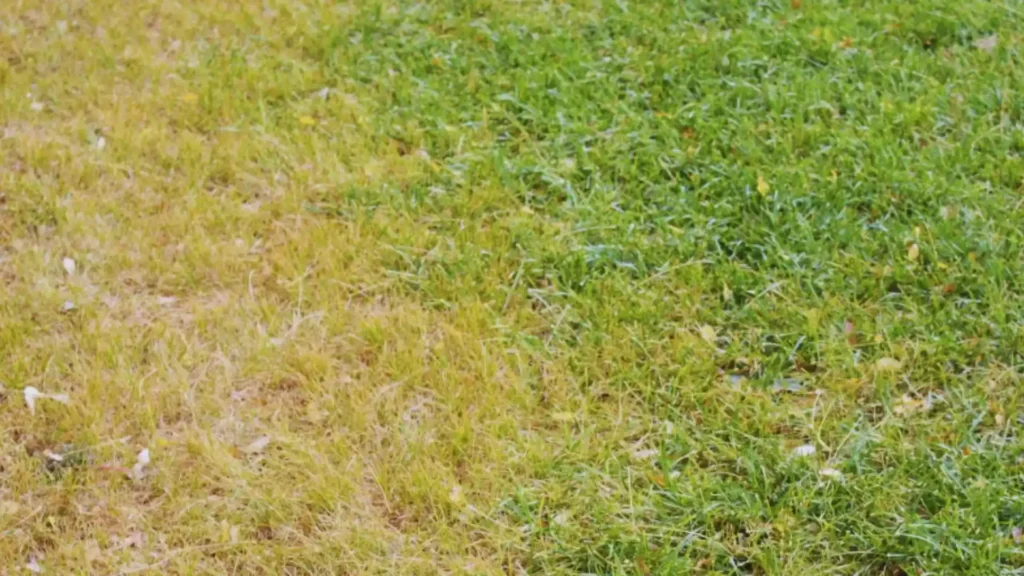
Yellowing after fertilization is a frustrating diagnostic problem because the symptom, yellow grass, can have multiple very different causes. Nitrogen deficiency looks like yellow grass. Iron deficiency looks like yellow grass. Fungal disease looks like yellow grass. Compaction-induced nutrient lockout looks like yellow grass. Treating the symptom without identifying the cause leads to repeated applications that do not help.
The most common cause in Northwest Arkansas is compacted soil blocking absorption. Fertilizer applied to compacted clay cannot penetrate to the root zone effectively. Granules dissolve on the surface and either wash off or sit at thatch level without reaching the roots that need the nutrients. The grass stays yellow because the roots are not receiving what was applied.
The second most common cause is iron deficiency. Iron produces the green pigment in grass blades. When iron is deficient, grass turns yellow, specifically a bright yellow-green between the leaf veins while the veins stay greener. This symptom is called chlorosis and it looks exactly like nitrogen deficiency to the untrained eye. Applying nitrogen to an iron-deficient lawn produces no improvement.
What Most Homeowners Get Wrong
The most common mistake is applying more fertilizer when the first application does not produce results. This feels logical but usually makes no difference when the underlying cause is compaction, pH, or iron deficiency. It can also cause fertilizer burn by adding more product on top of what has not yet been absorbed.
The second mistake is not testing soil pH. Soil pH controls nutrient availability. When pH drifts outside the 6.0 to 7.0 range that tall fescue prefers, nutrients already present in the soil become locked in forms the grass cannot absorb. A lawn can have adequate nitrogen, phosphorus, and potassium in the soil and still show deficiency symptoms if the pH is wrong. Lime application corrects low pH. Sulfur corrects high pH. Neither of those corrections requires more fertilizer.
The third mistake is misidentifying lawn disease as a nutrient problem. Fungal diseases like brown patch, dollar spot, and pythium blight create discolored patches that homeowners frequently interpret as yellowing from nutrient deficiency. Fertilizing an actively diseased lawn can worsen the disease by pushing the soft growth that pathogens thrive on.
What Actually Works
Start with a soil test before drawing conclusions. A soil test identifies pH, nitrogen levels, iron status, and other nutrient profiles. This single step eliminates the guesswork and points directly at the actual problem.
If compaction is the issue, aeration before or alongside the next fertilization application opens the soil and allows nutrients to reach the root zone. Fertilization applied to freshly aerated soil produces measurably better results than the same product on compacted ground.
If iron deficiency is the diagnosis, a targeted iron supplement or chelated iron product corrects the symptom directly. Iron supplements produce visible greening within one to two weeks on iron-deficient lawns.
If disease is suspected, identify the pattern carefully. Circular or irregular patches with defined edges suggest disease rather than nutrient deficiency. A lawn disease treatment program addresses the pathogen before fertilization resumes.
How This Applies in Northwest Arkansas
Iron deficiency is particularly common in Northwest Arkansas soils, especially in areas with higher pH or heavy clay content. The combination of clay soil and occasional high pH creates conditions where iron is present in the soil but not in a plant-available form. Homeowners in Rogers, Bentonville, Springdale, and Fayetteville frequently see chlorosis that resolves quickly with iron supplementation but does not respond to additional nitrogen.
Fayetteville shaded lawns are more prone to fungal disease symptoms that mimic nutrient deficiency. Low-light conditions, combined with high summer humidity, create disease pressure that produces yellowing and patchy appearance. Diagnosing these symptoms as a fertilization problem and applying more nitrogen actually worsens disease outcomes by promoting the soft, lush growth pathogens prefer.
On Springdale clay soil properties, compaction-related nutrient lockout is one of the most common reasons fertilization underperforms. Annual core aeration on these properties is not just helpful, it is often the primary fix that restores fertilization effectiveness.
Get a Lawn Care Plan That Works
At 1st Impressions Lawn and Tree, we diagnose before we treat. A lawn that stays yellow after fertilizing gets a proper assessment before another bag of product goes down. A complete lawn care program that includes soil testing, aeration, and targeted nutrient applications stops the cycle of applying fertilizer that does not work and starts building a lawn that actually responds.
Still yellow after fertilizing? Contact 1st Impressions Lawn and Tree for a diagnosis and a plan that addresses the real cause.