Introduction
Your lawn looks green from a distance, but something feels different when you walk across it.
The grass seems unusually spongy. Water takes longer to soak into certain areas, and the lawn does not seem to respond to fertilizer the way it used to.
You might assume the soil is compacted or that your irrigation system needs adjusting.
But another possibility is that too much thatch has accumulated beneath the grass.
Thatch is a natural part of turfgrass growth. Most healthy lawns contain some organic material between the green blades and the soil. Problems develop when this layer becomes too thick.
We see why this can be confusing for homeowners throughout Rogers, Bentonville, Springdale, and Fayetteville. Northwest Arkansas lawns already face challenges from rocky soil, compacted construction fill, hot summers, and periods of heavy rainfall.
Those conditions can create symptoms that resemble excessive thatch, even when the underlying problem is something else.
At 1st Impressions Lawn & Tree, we recommend identifying what is happening beneath the grass before choosing a treatment.
Understanding how thatch develops, when it becomes excessive, and how different grass types respond to removal can help you avoid unnecessary damage to your lawn.
Understanding What Lawn Thatch Really Is
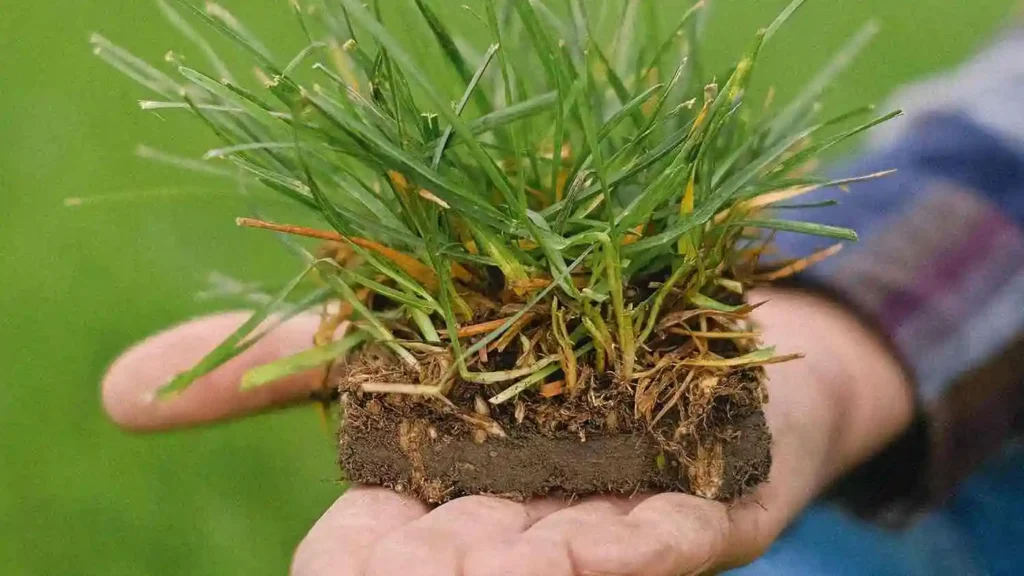
Thatch is a layer of organic material located between the green grass and the soil surface.
It consists primarily of plant structures that decompose relatively slowly, including:
- Grass stems
- Stolons, or aboveground runners
- Rhizomes, or underground stems
- Crowns and other persistent plant tissues
- Living and dead roots
These materials accumulate naturally as grass grows and older plant tissue dies.
Under healthy conditions, soil organisms gradually break down the organic material.
A thatch problem develops when accumulation exceeds decomposition.
Thatch Is Not the Same as Grass Clippings
One common misconception is that leaving grass clippings on the lawn automatically causes thatch buildup.
Grass clippings are mostly water and typically decompose relatively quickly when mowing is performed correctly.
Returning moderate amounts of clippings to the lawn can actually recycle nutrients.
Thatch is made primarily from tougher plant tissues that break down more slowly.
Removing every grass clipping will not necessarily solve an existing thatch problem.
A Thin Layer of Thatch Can Be Beneficial
Not all thatch is harmful.
A modest layer can help protect the soil surface and support the lawn during changing weather conditions.
Some potential benefits include:
- Reducing rapid moisture loss
- Moderating soil temperature
- Cushioning the grass crowns
- Reducing minor surface wear
- Providing habitat for beneficial soil organisms
The goal is not to remove every trace of organic material.
It is to prevent the layer from becoming thick enough to interfere with normal lawn growth.
When Thatch Becomes Excessive
A thatch layer approaching or exceeding approximately half an inch often deserves closer evaluation.
However, thickness alone does not always determine whether removal is necessary.
Grass type, soil condition, root development, and the severity of symptoms also matter.
Some lawns tolerate a modest layer without significant problems, while others may experience reduced water infiltration or shallow rooting.
Signs Your Lawn May Have Too Much Thatch
Excessive thatch can affect how the lawn feels, absorbs water, and responds to maintenance.
The Grass Feels Spongy Underfoot
A thick organic layer can create a soft, springy surface.
This is particularly noticeable when walking across an otherwise firm lawn.
However, a spongy feeling can also result from saturated soil.
If the lawn feels soft only after heavy rain, drainage may be the more important issue.
Water Does Not Reach the Soil Easily
Thick thatch can interfere with water movement.
In some cases, the organic layer becomes difficult to wet, causing irrigation water to move unevenly or run off.
The grass may appear dry even after watering.
Roots Remain Close to the Surface
Grass roots may grow within a thick thatch layer instead of extending into the mineral soil below.
This can leave the lawn more vulnerable to drought and temperature fluctuations.
Brown Patches Develop During Stressful Weather
Excessive thatch can contribute to moisture problems and create conditions that complicate disease management.
However, brown grass is not enough to confirm thatch buildup.
Drought stress, fungal diseases, insects, and soil problems can produce similar symptoms.
Our guide on why your lawn turns brown in summer even when you water it explains why discoloration often has more than one possible cause.
How to Check Thatch Thickness
You do not need to guess whether your lawn has excessive thatch.
A simple soil sample can reveal what is happening beneath the grass.
Remove a Small Section of Turf
Using a garden spade or soil-sampling tool, remove a small wedge of grass and soil from a representative area.
Try to include several inches of soil beneath the turf.
Identify the Layers
Look for three distinct sections:
- Green grass at the surface
- A brown, fibrous organic layer underneath
- Mineral soil below the organic material
The brown, fibrous layer is the thatch.
Measure its thickness without including the green blades or loose grass clippings.
Check More Than One Location
Thatch does not always accumulate evenly.
Inspect several areas, especially where the grass feels spongy or struggles during summer.
A lawn with one small problem area may not require the same treatment as a property with widespread buildup.
Why Bermuda and Zoysia Lawns Develop Thatch
Different turfgrass species produce different amounts of persistent plant material.
Bermuda and Zoysia are warm-season grasses commonly found in Northwest Arkansas.
Both spread through stems that can contribute to thatch accumulation.
Bermuda Grass
Bermuda grows aggressively during warm weather.
Its stolons and rhizomes help it spread and recover from wear.
However, intensive growth and certain maintenance practices can also increase organic material accumulation.
Zoysia Grass
Zoysia forms a dense turf canopy and can develop substantial thatch over time.
Its slower decomposition and dense growth habit may make buildup particularly noticeable in established lawns.
Tall Fescue
Tall fescue generally produces less thatch than spreading warm-season grasses.
Because it grows primarily in bunches rather than through extensive stolons and rhizomes, significant thatch accumulation is less common.
If a tall fescue lawn feels spongy or drains poorly, we would also investigate saturated soil, compaction, and accumulated organic debris before assuming that dethatching is needed.
Northwest Arkansas Soil Conditions Can Complicate Thatch Problems
Soil conditions are an important part of evaluating lawn health.
Much of Northwest Arkansas sits within the Ozark Plateau, where many properties have rocky or cherty silt loam over clay-rich subsoil.
In newer residential developments, grading and construction can leave behind compacted fill.
These conditions can affect water movement and root development.
Rocky Topsoil and Clay Subsoil
Some lawns have relatively shallow, rocky surface soil that dries quickly.
Beneath that layer, dense clay may drain more slowly.
This creates uneven moisture conditions.
If a thick thatch layer is also present, water movement may become even more complicated.
However, removing thatch will not correct an underlying drainage problem.
Compacted Construction Soil
Heavy equipment can compress soil during home construction.
Compaction reduces the pore spaces needed for water, oxygen, and root growth.
Homeowners may notice thin grass, surface runoff, and poor fertilizer response.
These symptoms can resemble thatch-related problems.
Our article on soil compaction and why your lawn won’t improve explains how to recognize this separate issue.
Soil Acidity and Organic Matter Breakdown
Many Northwest Arkansas soils are naturally acidic, although actual pH varies between properties.
Soil conditions can influence the organisms responsible for decomposing organic material.
However, applying lime simply because thatch is present is not appropriate.
A soil test should determine whether pH correction is necessary.
The University of Arkansas Cooperative Extension Service provides soil-testing resources through local county offices.
Lawn Care Practices That Encourage Excessive Thatch
Thatch buildup is not always caused by neglect.
In some cases, aggressive lawn maintenance can contribute to the problem.
Excessive Nitrogen Fertilization
Nitrogen supports grass growth, but applying more than the lawn needs can encourage rapid shoot production.
When plant material accumulates faster than it decomposes, thatch may increase.
Bermuda, Zoysia, and tall fescue have different fertilizer requirements.
A fertilization program should reflect the grass species, growing season, and soil-test recommendations.
Frequent Shallow Watering
Repeated light irrigation may encourage shallow root development.
Although shallow watering does not directly create thatch, it can make an existing thatch problem more noticeable by concentrating roots near the surface.
Poor Soil Conditions
Compaction, poor drainage, and unfavorable soil conditions can affect turf growth and decomposition.
Addressing these issues may help improve the lawn’s long-term condition.
Improper Mowing
Allowing grass to become excessively tall and then cutting it very short can stress the turf.
Scalping does not provide a reliable solution for thick thatch and may expose crowns or damage healthy grass.
The Difference Between Dethatching and Core Aeration
Homeowners sometimes use these terms interchangeably, but they address different problems.
Dethatching Removes Organic Material
Dethatching uses equipment designed to pull or cut through accumulated thatch.
The purpose is to reduce an excessive organic layer near the soil surface.
Depending on the equipment and intensity, the process can be disruptive to the grass.
Core Aeration Relieves Soil Compaction
Core aeration removes small plugs of soil from the lawn.
This creates openings that improve air and water movement in compacted areas.
Aeration can also bring soil into contact with the thatch layer, potentially supporting decomposition.
However, core aeration is not a direct substitute for removing a severely excessive thatch layer.
Choosing the Right Treatment
If the primary problem is compacted soil, aeration may be the more appropriate treatment.
If a thick thatch layer is interfering with turf health, dethatching may be considered.
Some lawns benefit from both, but the decision should be based on actual conditions.
Professional lawn aeration can be useful for Northwest Arkansas properties with confirmed compaction.
The Best Time to Dethatch Bermuda and Zoysia
Timing matters because dethatching can temporarily stress or injure turf.
The safest general approach is to perform significant dethatching when the grass is actively growing and has enough favorable weather ahead to recover.
Bermuda Grass
In Northwest Arkansas, Bermuda generally begins active growth during late spring.
Late spring through early summer can be an appropriate window for necessary dethatching once the lawn has fully greened up.
Avoid aggressive dethatching while Bermuda is dormant or just beginning to emerge from winter.
Zoysia Grass
Zoysia also benefits from treatment during active warm-season growth.
Because Zoysia often recovers more slowly than Bermuda, aggressive removal should be approached carefully.
Tall Fescue
Tall fescue rarely requires aggressive dethatching.
When significant organic buildup is confirmed, treatment is generally best considered during favorable cool-season growth, often in early fall.
The process should not be performed during severe summer heat.
Why Dethatching Too Early Can Damage Your Lawn
Northwest Arkansas weather can change quickly during spring.
A warm week in March does not necessarily mean Bermuda or Zoysia has entered sustained active growth.
Hard freezes can still occur, and soil temperatures may remain too cool for rapid recovery.
Dormant Grass Cannot Repair Damage Quickly
Dethatching removes or disturbs material around the grass crowns.
If the turf is dormant, recovery may be delayed.
Spring Green-Up Can Be Uneven
Bermuda may not green up fully until late April or May, depending on weather and site conditions.
Some lawns also experience winter injury or spring dead spot.
Aggressive dethatching before identifying these problems can make damaged areas worse.
Recovery Conditions Matter
Even during the correct season, avoid dethatching when the lawn is severely drought-stressed, waterlogged, or already weakened by disease.
Can Excessive Thatch Increase Lawn Disease Problems?
Thatch can influence the moisture and temperature conditions around the lower portions of grass plants.
When excessive buildup traps moisture or limits normal air movement, certain disease problems may become more difficult to manage.
Large Patch in Zoysia
Large patch is a fungal disease that commonly affects Zoysia during cool, moist conditions.
Symptoms may become visible during spring and fall.
A thick thatch layer can complicate moisture management, but it does not automatically mean large patch is present.
Spring Dead Spot in Bermuda
Spring dead spot affects Bermuda roots and underground stems.
The disease develops during cooler conditions and becomes visible during spring green-up.
Excessive thatch is not the sole cause of this disease, and removing thatch is not a cure.
Confirm the Actual Problem
A brown or thinning lawn may have multiple contributing factors.
Professional lawn disease treatment should follow identification of the disease rather than assumptions based on appearance.
Helping Your Lawn Recover After Dethatching
Dethatching can leave the lawn looking thin or uneven temporarily.
Recovery depends on the grass type, treatment intensity, and growing conditions.
Maintain Appropriate Moisture
Water according to the lawn’s needs and current weather.
Avoid keeping the soil constantly saturated.
For many established lawns, approximately 1 inch of water per week, including rainfall, is a useful starting point during active growth, but requirements vary.
Continue Proper Mowing
Use a mowing height appropriate for the grass species.
Avoid scalping the lawn immediately after treatment.
Follow Soil-Test Recommendations
Fertilizer may support recovery when nutrients are needed, but excessive applications can contribute to the same growth imbalance that encouraged thatch buildup.
Monitor Thin Areas
Bermuda may spread into disturbed areas during warm weather.
Zoysia generally recovers more slowly.
Tall fescue may require overseeding if individual plants have been lost.
Preventing Thatch From Becoming a Recurring Problem
The best approach is to manage turf growth and soil conditions consistently.
A few practical habits can help:
- Fertilize according to grass type and soil-test recommendations.
- Avoid excessive nitrogen applications.
- Mow regularly at an appropriate height.
- Water according to weather and soil moisture.
- Address confirmed soil compaction.
- Monitor drainage problems.
- Check thatch thickness before scheduling removal.
- Avoid unnecessary aggressive dethatching.
Homeowners should also remember that a thick, healthy-looking lawn does not necessarily have a thatch problem.
The condition of the organic layer beneath the grass matters more than how dense the lawn appears from above.
Frequently Asked Questions
How do I know if my lawn has too much thatch?
Remove a small section of turf and inspect the brown, fibrous layer between the green grass and mineral soil. A layer thicker than approximately half an inch may deserve attention, especially if the lawn feels spongy or water has difficulty reaching the soil.
Does Bermuda grass develop more thatch than tall fescue?
Bermuda can accumulate more thatch because it produces stolons and rhizomes. Tall fescue is primarily a bunch-type grass and generally develops less thatch. Actual buildup depends on growth conditions and maintenance practices.
When should I dethatch my lawn in Northwest Arkansas?
Bermuda and Zoysia are generally best dethatched, when necessary, during active growth in late spring or early summer. Tall fescue is usually better evaluated during favorable fall growth. Avoid dethatching dormant, drought-stressed, or severely weakened turf.
Will core aeration remove thatch?
Core aeration primarily addresses soil compaction. It may help support thatch decomposition by improving contact between soil and organic material, but it does not directly remove a severely thick thatch layer.
Can too much thatch cause brown patches?
Excessive thatch can contribute to shallow rooting, uneven moisture, and turf stress, which may lead to discoloration. However, brown patches can also result from drought, insects, fungal diseases, winter injury, and soil problems. The cause should be identified before treatment.
Final Thoughts
Thatch is a normal part of a growing lawn, and a thin layer does not automatically require removal.
Problems develop when organic material becomes thick enough to interfere with water movement, root growth, and normal turf maintenance.
For homeowners in Northwest Arkansas, identifying excessive thatch can be particularly challenging because compacted soil, rocky topsoil, clay subsoil, and drainage problems may create similar symptoms.
Bermuda and Zoysia lawns are more likely to develop significant thatch than tall fescue, but the appropriate treatment still depends on the actual condition of the lawn.
At 1st Impressions Lawn & Tree, we encourage homeowners throughout Rogers, Bentonville, Springdale, Fayetteville, and surrounding communities to evaluate the soil and turf before choosing between dethatching, aeration, or other lawn care services.
Removing thatch when it is not needed can cause unnecessary stress.
Ignoring a genuinely excessive layer can also make it harder for grass to develop healthy roots.
The goal is to maintain the right balance of organic material, healthy soil, and seasonal lawn care so your grass can grow stronger throughout the year.