Introduction
Zoysia grass is a popular choice for homeowners who want a dense, attractive lawn that can tolerate warm summer conditions.
When properly maintained, Zoysia forms a thick turf canopy that helps create a uniform appearance across the yard.
But during spring or fall, homeowners sometimes notice something concerning.
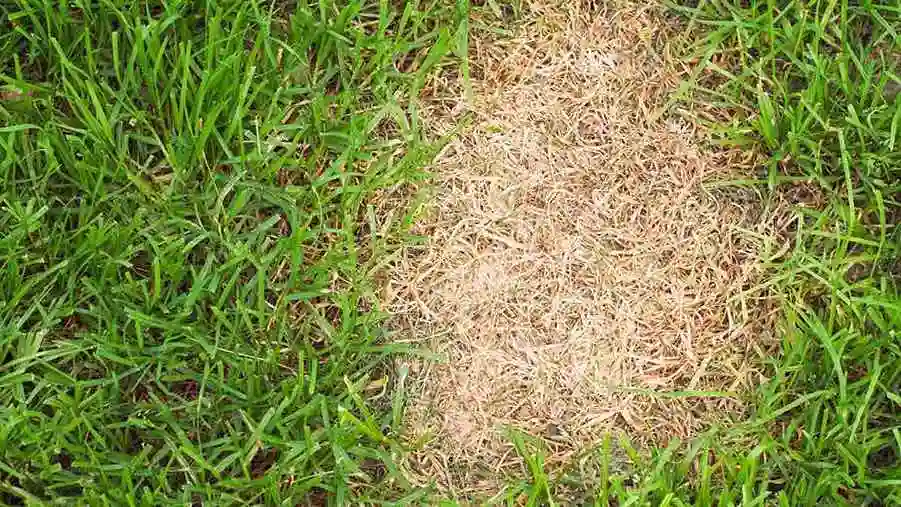
Large sections of the lawn begin turning brown, even though the grass looked healthy just a few weeks earlier.
The affected areas may appear circular at first. Over time, they can expand, develop irregular edges, or merge into larger patches.
In some cases, the outside edges look yellow or orange while the grass inside the patch turns brown.
For homeowners in Rogers, Bentonville, Springdale, and Fayetteville, these symptoms may indicate a fungal disease known as large patch.
However, Zoysia naturally changes color as temperatures cool, and other lawn problems can resemble fungal damage.
At 1st Impressions Lawn & Tree, we encourage homeowners to identify the cause before applying fertilizer, increasing irrigation, or choosing a fungicide.
Understanding when large patch develops and what makes Zoysia vulnerable can help protect your lawn throughout the changing seasons.
Understanding Large Patch Disease in Zoysia Grass
Large patch is a fungal disease commonly associated with Rhizoctonia solani.
It primarily affects warm-season grasses, including Zoysia.
The disease is especially noticeable during periods when the grass is growing slowly or transitioning into or out of dormancy.
Unlike some turf diseases that mainly affect individual grass blades, large patch can damage the lower portions of the plant, including leaf sheaths.
This may cause entire sections of turf to become discolored.
Why Zoysia Is Vulnerable
Zoysia develops a dense canopy that can retain moisture near the soil surface.
During cool, wet weather, prolonged moisture around the lower grass stems may create favorable conditions for fungal activity.
The grass also grows more slowly as temperatures decline.
This can limit its ability to replace damaged tissue.
Large Patch Is Different From Summer Brown Patch
Although the names sound similar, large patch in Zoysia and brown patch in tall fescue are generally managed as different turf disease problems.
Both are associated with Rhizoctonia fungi, but they affect different grasses and often develop under different seasonal conditions.
Correctly identifying the grass species is an important first step.
Common Signs of Large Patch Disease
Large patch often produces distinctive patterns, but appearance alone is not enough for a definitive diagnosis.
Circular or Irregular Brown Areas
Early symptoms may appear as relatively small discolored areas.
As the disease progresses, patches can expand to several feet across.
Multiple patches may eventually merge.
Yellow or Orange Patch Borders
One characteristic symptom is a yellowish or orange-brown border around an actively expanding patch.
This is sometimes called a smoke ring or advancing margin.
However, the border may not always be visible.
Its appearance depends on disease activity, moisture, and the stage of infection.
Damaged Leaf Sheaths
Grass blades may pull away more easily when the lower leaf sheath has been damaged.
The crowns and roots may remain alive, allowing recovery when conditions become favorable.
Recurring Damage in the Same Locations
Large patch may return to the same areas during successive spring or fall seasons.
This recurring pattern can be an important clue when evaluating the lawn.
Spring and Fall Conditions That Favor Disease
Large patch is commonly associated with cool, moist conditions.
For Zoysia lawns in Northwest Arkansas, the most important periods are often spring green-up and fall dormancy transition.
Spring Disease Activity
During March, April, and sometimes May, soil temperatures begin rising while rainfall can remain frequent.
Zoysia may still be growing slowly, particularly during cooler springs.
This combination can allow disease symptoms to become visible before the lawn reaches full active growth.
Fall Disease Activity
During September, October, and November, temperatures gradually decline.
Zoysia growth slows as the grass prepares for winter dormancy.
Cool nights, rainfall, and extended leaf wetness may create conditions favorable for large patch.
Why Weather Matters More Than a Fixed Date
Northwest Arkansas weather varies from year to year.
An unusually warm fall may delay dormancy, while a cool, rainy spring may prolong disease-favorable conditions.
Homeowners should monitor actual lawn conditions rather than assuming that disease activity begins on the same date every year.
Northwest Arkansas Soil and Drainage Conditions
Local soil conditions can influence how moisture moves through the lawn.
Across the Ozark Plateau, many properties have rocky or cherty surface soil over clay-rich subsoil.
Other lawns, particularly in newer residential developments, may contain compacted construction fill.
These conditions can create drainage challenges.
Water Accumulation Above Clay Subsoil
Clay-rich layers can slow downward water movement.
After heavy rain, moisture may remain near the surface longer than expected.
If the lawn also has a dense Zoysia canopy, the lower grass stems may remain wet for extended periods.
Compaction and Poor Root Development
Compacted soil restricts air and water movement.
It can also limit root growth, making turf less resilient during stressful weather.
Although compaction does not directly cause large patch, it can contribute to conditions that make lawn recovery more difficult.
Our article on soil compaction and why your lawn won’t improve explains why problems beneath the surface can affect overall turf health.
Standing Water Requires Separate Attention
If water remains in the lawn for long periods after rainfall, drainage should be evaluated independently.
Fungicide treatment will not correct poor grading, compacted fill, or persistent standing water.
The Role of Watering and Leaf Moisture
Excessive moisture around grass blades and lower stems can favor fungal development.
This does not mean homeowners should stop watering completely.
Instead, irrigation should match the needs of the grass and current weather.
Avoid Frequent Evening Irrigation
Watering late in the evening may leave grass wet throughout the night.
When weather is already cool and humid, prolonged leaf wetness can increase disease risk.
Water During the Morning
Early morning irrigation generally allows grass blades to dry as the day warms.
This can help reduce unnecessary periods of leaf moisture.
Adjust for Seasonal Rainfall
Northwest Arkansas can experience significant rainfall during spring and fall.
Automatic irrigation systems should be adjusted when natural rainfall provides sufficient moisture.
Watering on a fixed schedule regardless of weather can create unnecessary saturation.
Check Irrigation Coverage
Some lawns have dry areas and excessively wet areas at the same time.
Inspect sprinkler patterns to identify uneven coverage.
Proper irrigation management helps maintain healthier turf while reducing avoidable moisture stress.
Fertilization Practices and Large Patch Development
Fertilization supports healthy Zoysia growth, but timing and application rates matter.
Avoid Excessive Fall Nitrogen
Zoysia is a warm-season grass.
As temperatures decline, its growth slows and it begins preparing for dormancy.
Applying excessive nitrogen late in the season can encourage growth when the turf should be transitioning toward winter.
This may increase disease susceptibility and cold stress.
Fertilize During Active Growth
Most Zoysia fertilization should be planned around its active growing season.
In Northwest Arkansas, this generally occurs from late spring through summer.
The exact program depends on soil fertility, turf variety, and maintenance goals.
Soil Testing Before Applying Amendments
Many Northwest Arkansas soils are naturally acidic, but pH varies considerably.
The University of Arkansas Cooperative Extension Service offers soil-testing resources through county Extension offices.
Testing can help identify nutrient needs and determine whether lime is appropriate.
Applying lime without a soil test is not a reliable method of controlling large patch.
Our guide on how to know if your lawn needs lime explains why soil testing should guide pH adjustments.
Distinguishing Large Patch From Normal Zoysia Dormancy
One reason large patch is frequently misunderstood is that Zoysia naturally turns brown as temperatures decline.
However, dormancy and disease do not always look the same.
Normal Seasonal Dormancy
As fall temperatures drop, Zoysia gradually loses green color.
The change may begin in shaded or colder areas before spreading throughout the lawn.
During spring, green-up may also occur unevenly.
Large Patch Disease
Large patch often produces more defined circular or irregular areas.
Active patches may have yellow or orange margins.
The same locations may show symptoms in both spring and fall.
Comparing the Pattern Over Time
Photographs taken throughout the season can help distinguish recurring disease patterns from normal seasonal changes.
If an area remains brown while surrounding Zoysia becomes actively green, further investigation may be appropriate.
Our article on how to tell if brown grass is dead or dormant provides additional guidance on evaluating seasonal discoloration.
Other Problems That Cause Brown Patches in Zoysia
Not every brown patch is caused by large patch disease.
Several other problems can create similar symptoms.
Drought Stress
During hot, dry weather, Zoysia may develop brown or thinning areas.
This is especially possible on rocky slopes or in areas with limited soil depth.
Winter Injury
Hard freezes and winter weather can damage warm-season turf.
Northwest Arkansas occasionally experiences severe cold events that affect exposed or weakened grass.
White Grub Damage
Japanese beetle and June beetle larvae may feed on turf roots.
Affected grass can become weak, discolored, or easy to pull away from the soil.
Professional grub control may be appropriate when root-feeding insects are confirmed.
Excessive Thatch
Zoysia can develop a dense thatch layer over time.
Excessive thatch may interfere with water movement and contribute to shallow rooting.
However, dethatching should only be performed when buildup is confirmed and the grass is actively growing.
Chemical or Fertilizer Injury
Improper herbicide applications or excessive fertilizer can also cause discoloration.
The location and pattern of damage may help identify these issues.
Professional Diagnosis of Large Patch
Accurate diagnosis is important because treatment strategies differ between diseases, insects, and environmental problems.
Reviewing Seasonal Symptoms
A professional evaluation may consider:
- Grass species
- Time of year
- Shape and size of affected patches
- Presence of yellow or orange margins
- Recent rainfall and irrigation
- Soil drainage
- Fertilization history
- Recurrence in previous seasons
Inspecting Grass Tissue
Large patch commonly affects lower leaf sheaths.
Examining damaged tissue may provide clues that distinguish the disease from drought or winter injury.
Laboratory Confirmation
When symptoms are unclear or the problem repeatedly returns, laboratory testing may be useful.
A confirmed diagnosis helps avoid unnecessary or incorrectly timed treatments.
Managing Large Patch in Established Zoysia Lawns
Large patch management usually involves improving growing conditions and reducing disease pressure.
No single treatment guarantees that the disease will never return.
Improve Irrigation Practices
Avoid unnecessary evening watering.
Reduce irrigation during periods when rainfall is already providing sufficient moisture.
Address Drainage Problems
Persistent standing water and saturated soil should be investigated.
Improving drainage may support turf health and reduce prolonged moisture near the grass canopy.
Maintain Appropriate Mowing Heights
Zoysia is commonly maintained around 1–2.5 inches, depending on the cultivar and mowing equipment.
Avoid removing excessive leaf material during a single mowing.
Avoid Unnecessary Late-Season Fertilization
Nitrogen applications should reflect Zoysia’s active growing season.
Excessive late-season growth can increase stress during the transition to dormancy.
Evaluate Fungicide Treatment
For confirmed large patch, fungicides labeled for the disease may be appropriate.
Preventive applications are often considered during fall as soil temperatures decline into the range favorable for disease development.
Depending on local conditions and the product, spring applications may also be recommended.
The correct timing, number of applications, and treatment method depend on the label and professional recommendations.
Our lawn disease treatment services can help homeowners address recurring fungal disease concerns.
Recovery After Large Patch Damage
Zoysia may recover from large patch when the crowns and roots remain alive.
However, recovery can take time.
Spring Recovery
As temperatures warm and Zoysia enters active growth, healthy grass may begin producing new leaves.
Affected areas can gradually regain color.
Summer Recovery
Warm weather generally supports Zoysia growth.
With appropriate moisture, nutrition, and mowing, healthy turf may spread into damaged sections.
Severe Damage
If large areas have died or become extremely thin, additional repair may be necessary.
The best method depends on the Zoysia variety and the condition of the remaining turf.
Avoid Aggressive Repairs During Dormancy
Major lawn renovation during cold weather may be unsuccessful because Zoysia is not actively growing.
Repairs should be timed for favorable growing conditions.
Preventing Recurring Large Patch Problems
Large patch can return when the same environmental conditions occur year after year.
A consistent management plan is more effective than waiting until the lawn develops extensive brown areas.
Important practices include:
- Monitoring recurring patches during spring and fall
- Adjusting irrigation to rainfall and temperature
- Avoiding prolonged evening leaf wetness
- Correcting drainage problems where practical
- Maintaining appropriate mowing heights
- Avoiding excessive fall nitrogen
- Testing soil before applying lime
- Managing confirmed soil compaction
- Considering preventive fungicides when justified
- Documenting affected areas for future comparison
The goal is to reduce the conditions that favor disease while supporting healthy Zoysia growth.
Frequently Asked Questions
Why does my Zoysia grass turn brown in circular patches?
Circular brown patches may indicate large patch disease, especially during cool, wet spring or fall weather. However, dormancy, drought, insects, and soil problems can create similar symptoms. The pattern, season, and condition of the grass should be evaluated before treatment.
Does large patch disease kill Zoysia grass permanently?
Large patch often damages leaf sheaths while leaving crowns and roots alive. In these cases, Zoysia may recover during active warm-season growth. Severe or repeated damage can cause significant thinning and may require additional repair.
When is large patch disease most active in Arkansas?
Large patch is commonly active during cool, moist conditions in spring and fall. In Northwest Arkansas, symptoms may appear during spring green-up or as Zoysia begins entering dormancy. Actual timing depends on soil temperatures and weather.
Can fertilizer fix brown patches caused by large patch?
Fertilizer does not directly control the fungus responsible for large patch. Excessive nitrogen, particularly during fall, may worsen disease pressure. Fertilization should follow soil-test recommendations and the grass’s active growing season.
Should I apply fungicide to Zoysia every spring and fall?
Not every lawn requires routine fungicide treatment. Preventive applications may be appropriate for properties with confirmed recurring large patch, but the decision should depend on disease history, environmental conditions, and product recommendations.
Final Thoughts
Large brown patches in Zoysia grass can be frustrating, especially when they appear during spring green-up or just before winter dormancy.
Although large patch disease is a common concern, brown grass does not automatically mean a fungal infection is present.
Normal dormancy, winter injury, drought stress, insects, and soil problems can produce similar symptoms.
For homeowners in Northwest Arkansas, rocky and cherty soils, compacted clay, heavy seasonal rainfall, and changing temperatures can make these problems more complicated.
At 1st Impressions Lawn & Tree, we encourage homeowners throughout Rogers, Bentonville, Springdale, Fayetteville, and surrounding communities to identify the cause before choosing a treatment.
Effective large patch management focuses on accurate diagnosis, appropriate irrigation, balanced fertilization, improved drainage, and preventive disease control when necessary.
With the right seasonal approach, Zoysia lawns can recover from many disease-related setbacks and maintain healthier growth throughout the year.
The most important step is understanding why the patches developed so the same problem is less likely to return during the next spring or fall.