Introduction
If you have ever noticed a patch of grass in your lawn that seems to grow faster than everything around it, stays greener than the rest of the turf, and feels coarser and stiffer when you run your hand across it, you have probably been looking at nutsedge without knowing it.
Nutsedge is one of the most frustrating weeds homeowners deal with in Northwest Arkansas. It looks enough like grass that many people do not identify it as a weed until it has already established itself across a significant area. And the common instincts for dealing with weeds, pulling them out, spraying a general broadleaf herbicide, mowing more often, either do not work or actively make the problem worse.
Here is what nutsedge actually is, why it is so hard to control, and what actually works.
What Makes Nutsedge Different From Other Weeds
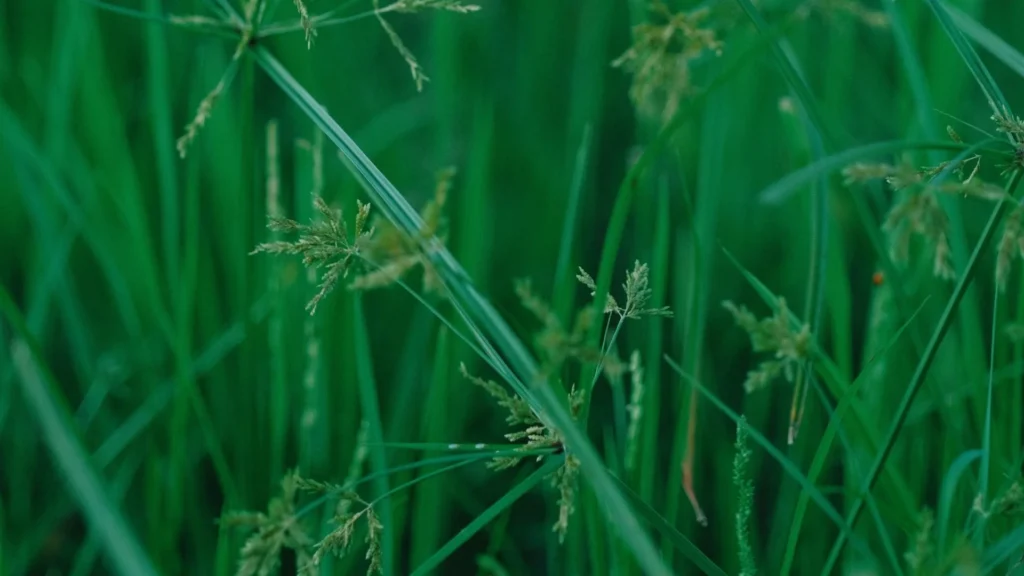
Nutsedge is not a grass and it is not a broadleaf weed. It belongs to the sedge family, which is a distinct plant category with its own biology. You can identify it by its triangular stem cross-section, its leaves that emerge in sets of three from the base, and its tendency to grow faster and taller than the surrounding turf between mowing cycles.
In Northwest Arkansas, yellow nutsedge is the most common variety. It thrives in wet, poorly drained areas and emerges aggressively in late spring and summer when soil is warm. It grows from underground tubers called nutlets, and this is what makes it so difficult to control.
Each nutsedge plant can produce hundreds of nutlets that remain viable in the soil for years. When you pull a nutsedge plant by hand, the stem breaks off above the nutlet. The nutlet stays in the soil and sends up new shoots, often multiple new plants rather than one. Hand pulling does not remove the weed. It multiplies it.
Why Standard Weed Control Does Not Work on Nutsedge
Pre-emergent herbicides, which are effective against crabgrass and many other common lawn weeds, do not control nutsedge. Nutsedge does not germinate from seed the way those weeds do. It spreads primarily through its underground nutlet and rhizome system, which is already in the soil before the plant ever appears above ground.
Common broadleaf post-emergent herbicides that control dandelions, clover, and plantain are also ineffective against nutsedge. The plant’s biology is different enough that most standard weed control products simply pass through it without damage.
Effective nutsedge control in your lawn requires herbicides specifically formulated for sedge species. Products containing halosulfuron or sulfentrazone are the two most common active ingredients used by lawn care professionals. These products target the sedge family specifically and, when applied at the right time and rate, provide meaningful control.
The Right Time to Treat Nutsedge
Timing matters significantly with nutsedge treatment. The most effective window is when plants are young and actively growing, typically in late spring through early summer when nutsedge first emerges and plants are in the two to four leaf stage.
Treating mature nutsedge later in the season is less effective because larger plants have already allocated energy to producing new nutlets. You can knock back the top growth, but the underground system is well established and recovery is faster.
Nutsedge control in your lawn also rarely works in a single season. The nutlet bank in the soil is typically large enough that even after above-ground plants are eliminated, new ones emerge from surviving nutlets. A consistent two to three year program of early-season treatment is usually required to significantly reduce nutsedge pressure in a heavily infested lawn.
Fixing the Conditions That Let Nutsedge Thrive
Nutsedge thrives in wet, poorly drained soil. While chemical control is necessary to manage existing plants, addressing the drainage and moisture conditions that favor nutsedge gives you a significant long-term advantage.
Improve drainage: Low spots that hold water after rain are prime nutsedge territory. Grading to eliminate standing water, extending downspouts away from problem areas, or installing drainage solutions reduces the wet conditions nutsedge prefers.
Adjust irrigation: Overwatering, especially frequent shallow watering that keeps the surface soil consistently moist, creates ideal conditions for nutsedge. Watering deeply and less frequently encourages deeper turf roots and reduces surface moisture.
Increase turf density: Dense, healthy grass is the best long-term defense against any weed, including nutsedge. A lawn care program that includes fertilization, aeration, and overseeding in appropriate areas produces the turf density that makes weed establishment harder across the board.
Do not over-mow: Cutting turf too short reduces its competitive ability and creates thin spots where nutsedge can establish. Keeping grass at the appropriate height for its variety maintains the canopy closure that limits weed germination and spread.
What to Expect From a Professional Nutsedge Program
When we treat nutsedge at 1st Impressions Lawn and Tree, we use selective sedge herbicides applied during the active growth window. A single application provides significant knockback, but we plan for follow-up applications because nutsedge control is a multi-season process in most lawns.
We also evaluate the conditions contributing to nutsedge pressure and make recommendations for drainage, irrigation scheduling, and turf density improvements that reduce the environmental advantage the weed is exploiting.
Homeowners who expect to eliminate nutsedge in one treatment are usually disappointed. Homeowners who commit to a consistent two to three season program see dramatic, lasting results.
Frequently Asked Questions
Q: How do I know if I have nutsedge or just coarse grass?
A: Roll a leaf between your fingers. Nutsedge leaves are stiff and waxy with a distinct ridge down the center. The stem is triangular rather than round or flat like grass stems. Nutsedge also tends to grow noticeably faster than the surrounding turf, standing above it between mow cycles even when mowed at the same time.
Q: Can I pull nutsedge out by hand?
A: Hand pulling is counterproductive with nutsedge. The stem breaks above the nutlet, leaving the underground structure intact. The nutlet then sends up multiple new shoots. If you do pull nutsedge, do it as early as possible before the plant has established additional nutlets, but understand that this is a short-term cosmetic fix rather than a real solution.
Q: Will pre-emergent weed control stop nutsedge?
A: Standard pre-emergent herbicides do not prevent nutsedge because it spreads from underground nutlets rather than seed. Some products labeled specifically for nutsedge suppression can limit early establishment, but they are different from the pre-emergents used for crabgrass and other common weeds.
Q: Is nutsedge the same as crabgrass?
A: No. They are completely different plants. Crabgrass is a warm-season annual grass that germinates from seed and is controlled with pre-emergent herbicides. Nutsedge is a perennial sedge that spreads from underground nutlets and requires sedge-specific herbicides. Treating nutsedge with crabgrass control products will not work.
Q: Why does nutsedge seem to get worse every year?
A: Each mature nutsedge plant produces numerous nutlets that overwinter in the soil and generate new plants the following season. Without consistent targeted treatment, the nutlet bank in the soil grows larger each year and nutsedge pressure increases. Reversing this trend requires multiple seasons of early, consistent treatment.
Q: Does nutsedge go away on its own in winter?
A: The above-ground foliage dies back in fall when temperatures drop. But the underground nutlets are cold-hardy and survive winter readily. The plant returns each spring from the same nutlet system. Nutsedge does not resolve on its own without treatment.
Conclusion
Nutsedge is one of the most persistent and misunderstood weeds in Northwest Arkansas lawns. Its biology is different from common grasses and broadleaf weeds, which means the standard approaches to weed control do not apply. Pulling it makes it worse. General herbicides do not affect it. Pre-emergents do not stop it.
What works is sedge-specific herbicide applied early and consistently over multiple seasons, combined with drainage improvements and turf density programs that reduce the conditions nutsedge thrives in.
At 1st Impressions Lawn and Tree, we treat nutsedge as part of our weed control programs for homeowners across Rogers, Bentonville, Springdale, and Fayetteville. If nutsedge has been getting worse in your lawn year over year, call (479) 426-4644 or email info@1stimpressionslawntree.com. We can assess what you are dealing with and put a plan together that actually works. Better Lawn. Better Living.