Introduction
You have been watering consistently. You did not skip your fertilizer applications. But sometime in late summer a section of your lawn starts looking brown and stressed, and it is not responding the way drought-stressed grass normally does. Then you notice birds digging into the turf. Or you try to pull back a section of dead grass and it lifts away from the soil with almost no resistance.
That is grub damage. And it is more common in Northwest Arkansas lawns than most homeowners realize.
Grubs are not a sign that you did something wrong. Beetles lay their eggs in turf, the eggs hatch, and the larvae feed on roots. It happens to well-maintained lawns and neglected ones alike. The difference between a lawn that recovers and one that does not is how quickly the problem is identified and treated.
What Are Lawn Grubs?
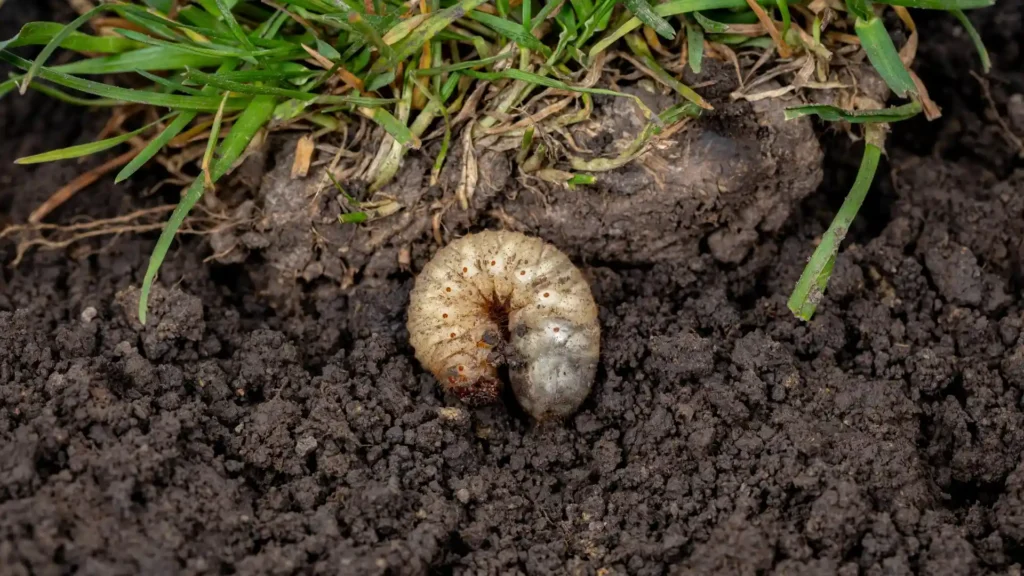
Lawn grubs are the larvae of several beetle species. In Northwest Arkansas, the most common culprits are Japanese beetle larvae, masked chafer beetles, and June beetles. The adult beetles lay their eggs in turf in summer, typically in July and August. The eggs hatch into C-shaped white larvae that live in the top 2 to 4 inches of soil and begin feeding on grass roots immediately.
Through late summer and fall, grubs feed actively and grow quickly. As soil temperatures cool in fall, they migrate deeper into the soil. In spring, they move back up and resume feeding briefly before pupating into adult beetles and starting the cycle again.
The damage is most visible in late summer and early fall when the feeding is most intense and the turf above the root zone starts to die.
Signs Your Lawn Has a Grub Problem
Irregular brown patches in late summer: Grub damage typically appears as irregular dead patches rather than uniform browning. The pattern does not follow irrigation zones or shade lines. It appears randomly and expands as feeding continues.
Turf that pulls up like carpet: This is the most definitive sign. Healthy grass roots anchor the turf firmly in the soil. When grubs destroy the root system, the turf detaches. If you can grab a handful of brown grass and peel it back from the soil with little resistance, check the soil underneath for white C-shaped larvae.
Increased bird and wildlife activity: Grubs are a food source for birds, skunks, raccoons, and armadillos. If you are seeing unusual digging activity in your lawn, especially in the areas showing stress, something is eating grubs below the surface. The wildlife damage from digging can sometimes be as significant as the grub damage itself.
Stress that does not respond to watering: Drought-stressed grass typically recovers with water. Grub-damaged grass does not, because the roots that would take up that water have been destroyed. If a brown patch keeps spreading despite irrigation, grubs may be the cause.
Spongy feel underfoot: Turf with significant grub activity may feel soft or spongy in affected areas because the root layer holding the soil together has been compromised.
How to Confirm a Grub Infestation
Suspicion is not enough. Before treating, confirm the presence and population of grubs in your soil. The standard method is a simple soil plug test.
Cut a one-square-foot section of turf about 3 inches deep in an area showing stress, near the border between healthy and damaged turf. Fold the section back and count the grubs in the exposed soil. Fewer than five grubs per square foot is generally considered a low population that healthy turf can tolerate. More than five to ten per square foot warrants treatment.
Check multiple spots across the lawn, especially in the areas showing the most stress. Grub populations are rarely uniform.
When to Treat for Grubs
Timing matters significantly with grub control. There are two windows, and they target different stages of the life cycle.
Preventive treatment in early summer: Applied in June or early July before eggs hatch, preventive products get into the soil and are present when young larvae begin feeding. This is the most effective approach for lawns with a history of grub problems. Young larvae are much easier to kill than mature ones.
Curative treatment in late summer or early fall: If you missed the preventive window and are seeing active damage, curative products can be applied to kill larger larvae already in the soil. These products require adequate soil moisture to move into the root zone, so watering before and after application is important. Curative treatments are less reliable than preventive applications.
Treating in late fall or winter when grubs have moved deep into the soil is largely ineffective. The product cannot reach them at that depth.
Can Grub Damage Be Repaired?
Yes, in most cases. Once the grub population is treated and eliminated, the lawn can be repaired. Mildly damaged turf with some surviving roots may recover on its own with fertilization and consistent watering through fall. More severely damaged areas will need to be reseeded or resodded.
Fall is the best time to overseed cool-season grass after grub damage. For warm-season grasses like Bermuda, repair is typically best done in late spring after the grass has broken dormancy.
One important note: repairing grub damage without treating the underlying pest problem means you are setting up the repaired turf for damage in the next cycle. Treatment and repair need to happen together.
Frequently Asked Questions
Q: How do I know if it is grubs or drought causing my brown patches?
A: Water the affected area thoroughly and observe over the next week. Drought-stressed grass will typically begin recovering with adequate moisture. Grub-damaged grass will continue to decline or stay the same because the roots are gone. The peel-back test is the most reliable confirmation method.
Q: Do I need to treat my whole lawn or just the damaged area?
A: Treating the damaged area alone is often not enough. Grubs spread through the lawn and may be present in areas that have not yet shown visible damage. A whole-lawn preventive treatment in early summer is more effective than spot treating after damage appears.
Q: Are grubs the same every year?
A: Beetle populations and egg-laying activity vary year to year depending on conditions. However, lawns that have had grub problems are more likely to experience them again because the adult beetles return to areas where they previously laid eggs. A preventive program is the most reliable protection.
Q: Is grub control safe for my family and pets?
A: Professional grub control products are applied at rates that are safe for people and pets once the product has been watered in and dried. A professional applicator will advise you on the appropriate re-entry window after treatment.
Q: Can grubs damage tree and shrub roots too?
A: Grubs primarily feed on turf grass roots in the shallow soil zone. They are less commonly a problem for established trees and shrubs with deep root systems, but young plantings in affected areas can occasionally experience root damage.
Q: What time of year should I be watching for grub damage in Northwest Arkansas?
A: Late July through September is the primary window for visible grub damage in our area. This is when larvae are actively feeding and turf stress becomes visible. If you are going to do a soil plug check, late August to mid-September gives you the best chance of finding larvae near the surface.
Conclusion
Grub damage is a solvable problem when it is caught at the right time. The challenge is that the signs can look like drought stress or other common lawn problems, which is why the peel-back test and soil plug check are so valuable. Seeing the larvae yourself removes all the guesswork.
Prevention is always more effective than treatment after damage appears. If your lawn has had grub issues in the past, a properly timed preventive application in early summer is the most reliable way to protect it going forward.
At 1st Impressions Lawn and Tree, we offer grub control as part of our lawn care programs for homeowners across Rogers, Bentonville, Springdale, and Fayetteville. Call (479) 426-4644 or email [email protected] to schedule an evaluation. Better Lawn. Better Living.