Introduction
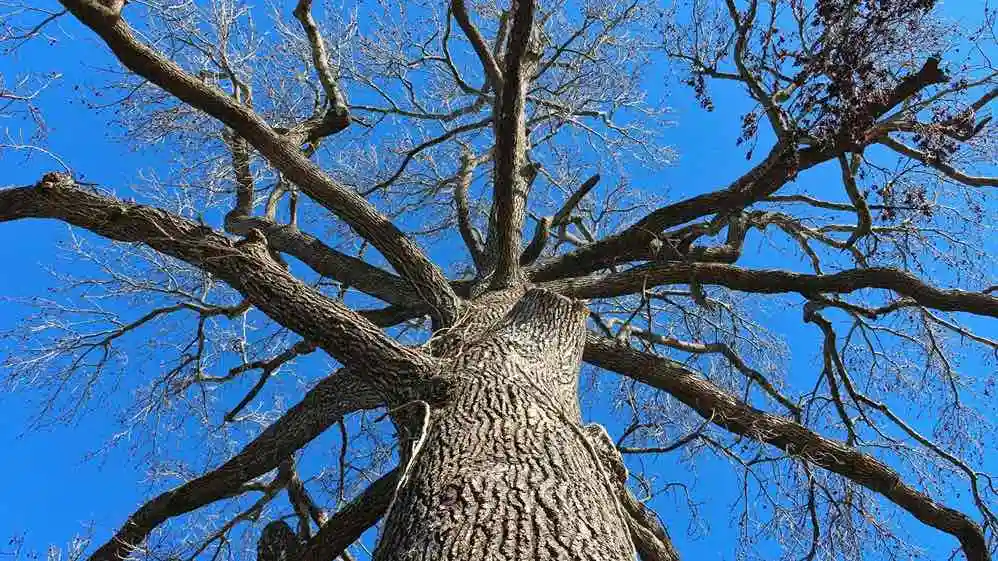
Oak trees are an important part of the Northwest Arkansas landscape.
They provide shade during hot summers, support local wildlife, and add character to residential neighborhoods.
In established areas of Rogers, Bentonville, Springdale, and Fayetteville, mature oaks may have been growing long before the surrounding homes were built.
Because these trees can live for many decades, homeowners often expect them to remain healthy with relatively little attention.
But even large, established oak trees can begin showing signs of stress.
The canopy may look thinner than it did a few years ago. Leaves may become smaller, branches may begin dying, or sections of the tree may lose foliage earlier than expected.
These changes can be concerning, especially when the tree is close to a house or provides significant shade.
At 1st Impressions Lawn & Tree, we encourage homeowners to recognize that oak decline is often a gradual process.
A tree may experience several years of drought, root disturbance, soil compaction, or other stress before obvious symptoms appear.
Understanding the possible causes is the first step toward determining what care may help and whether the tree needs professional evaluation.
Understanding Oak Tree Decline
Oak decline is a general term used to describe the gradual deterioration of an oak tree’s health.
It is not always a single disease with one specific cause.
Instead, decline often develops through a combination of environmental stress, root problems, and biological factors.
Primary Stress Factors
Primary stresses are conditions that weaken the tree over time.
These may include:
- Prolonged drought
- Soil compaction
- Construction damage
- Poor drainage
- Root disturbance
- Severe weather
- Repeated defoliation
Secondary Problems
Once an oak becomes weakened, it may be more vulnerable to certain insects and diseases.
These secondary problems can contribute to additional branch dieback and canopy loss.
Why Decline Can Be Difficult to Diagnose
Several problems may produce similar symptoms.
A thinning canopy could result from drought, root damage, disease, or a combination of conditions.
Identifying the underlying cause requires looking at the tree’s environment, history, and visible symptoms.
Early Warning Signs of a Declining Oak Tree
Oak trees may show subtle changes before severe decline becomes obvious.
Recognizing these signs early can help homeowners determine when an evaluation is needed.
Thinning Canopy
A healthy mature oak generally produces a canopy appropriate for its species, age, and growing conditions.
When branches begin carrying fewer leaves, the crown may look unusually open.
More sunlight may reach the ground beneath the tree.
Dead Branches Near the Top
Branch dieback in the upper canopy can indicate stress.
However, isolated dead branches are not always evidence of widespread decline.
The number, size, and distribution of dead limbs matter.
Smaller or Discolored Leaves
Leaves may become smaller, yellowed, scorched, or otherwise abnormal.
These symptoms can result from several different causes, including moisture stress and root problems.
Premature Leaf Drop
Some stressed oaks may shed leaves earlier than expected.
However, leaf drop patterns vary by species and weather conditions.
Epicormic Growth
Stressed trees sometimes produce clusters of new shoots along the trunk or larger branches.
This growth, known as epicormic sprouting, can be associated with stress or changes in canopy conditions.
It is not a definitive diagnosis on its own.
Drought Stress in Northwest Arkansas Oaks
Drought is an important contributor to oak decline.
Northwest Arkansas summers can bring prolonged heat and periods of limited rainfall.
Even established trees may experience moisture stress during extended dry conditions.
Mature Trees Still Need Water
Large oaks often have extensive root systems.
However, much of their water-absorbing root system is located in the upper portions of the soil.
When these layers become dry, the tree may struggle to maintain normal water movement.
Drought Symptoms May Appear Gradually
A tree may survive a dry summer without immediately showing severe symptoms.
However, repeated drought stress can reduce growth and weaken the tree over time.
Canopy thinning or branch dieback may become more noticeable in later seasons.
Shallow and Rocky Soils Increase Stress
Some Northwest Arkansas properties have relatively shallow, rocky or cherty soils.
These soils may hold less available moisture than deeper soil profiles.
Trees growing on exposed slopes may experience additional drought stress.
Supporting Trees During Extended Dry Periods
During prolonged drought, supplemental watering may benefit established landscape oaks.
Water should reach the root zone gradually rather than running off the surface.
Avoid keeping the soil continuously saturated.
The amount and frequency depend on soil conditions, tree size, and recent rainfall.
Soil Compaction and Restricted Root Growth
Soil compaction is another important factor in oak tree health.
Roots need oxygen, moisture, and space to grow.
When soil becomes compacted, these resources become less available.
Construction Equipment and Heavy Traffic
New homes, driveways, sidewalks, and landscape renovations often involve heavy equipment.
Repeated equipment movement can compress soil within a tree’s root zone.
Reduced Soil Oxygen
Compaction decreases the pore spaces that allow air and water to move through the soil.
Roots may grow more slowly or become damaged under unfavorable conditions.
Long-Term Effects on Mature Trees
A mature oak may not show immediate symptoms after soil compaction.
Decline can develop gradually over several growing seasons.
This delayed response can make it difficult to connect current symptoms with past construction activity.
Protecting the Root Zone
Avoid unnecessary vehicle traffic, soil storage, and equipment movement beneath mature trees.
Where possible, maintain an undisturbed area around the trunk and extending into the surrounding root zone.
Construction Damage and Oak Tree Decline
Construction-related root damage is especially important in growing Northwest Arkansas communities.
In Bentonville and Rogers, established trees may remain on properties while nearby land is graded or developed.
Although preserving mature trees is valuable, construction activity can affect their health.
Root Cutting During Excavation
Installing utilities, foundations, retaining walls, or drainage systems may require excavation.
Cutting major roots can reduce water uptake and, in some cases, affect structural stability.
Changes in Soil Grade
Adding soil over existing roots can reduce oxygen availability.
Removing soil can expose and injure roots.
Even relatively modest changes may affect sensitive areas of the root system.
Damage From Heavy Equipment
Equipment can compact soil, wound trunks, and break surface roots.
These injuries may create long-term problems.
Preventing Construction-Related Stress
Before major landscape or building projects, consider having a qualified arborist evaluate trees that will remain on the property.
Planning protective zones and avoiding unnecessary root disturbance can reduce preventable damage.
Poor Drainage and Excess Soil Moisture
Although drought is a common concern, excessive moisture can also harm oak roots.
Roots require oxygen to function properly.
When soil remains saturated for extended periods, oxygen availability may decline.
Clay-Rich Subsoil
Some Northwest Arkansas properties contain clay-rich subsoil beneath rocky or loamy surface layers.
Water may move slowly through these deeper layers.
Low Areas and Standing Water
Trees growing in poorly drained depressions may experience prolonged saturation after heavy rainfall.
The severity of the problem depends on soil conditions and the oak species.
Root Stress and Secondary Problems
Poor drainage can weaken roots and contribute to conditions favorable for certain root diseases.
However, standing water alone does not confirm that a tree has a fungal infection.
Correcting Drainage Problems Carefully
Drainage improvements should be planned to avoid cutting important roots or changing soil levels excessively.
Major excavation near mature oaks may create additional damage if not properly evaluated.
Oak Species and Differences in Stress Tolerance
Not all oak trees respond to environmental conditions in the same way.
Northwest Arkansas landscapes may contain several native and planted oak species.
White Oak
White oak is a valued native species that can develop into a large, long-lived shade tree.
It generally performs best where soil conditions provide adequate rooting space and drainage.
Northern Red Oak
Northern red oak is another important landscape and woodland species.
It can experience stress from drought, soil disturbance, and certain diseases.
Pin Oak
Pin oak is sometimes planted in landscapes but may develop iron chlorosis when soil pH is unsuitable.
Yellowing leaves with greener veins can be a clue, although laboratory testing may be needed to confirm the cause.
Species Identification Matters
Different oaks vary in their tolerance for drought, flooding, soil pH, and other conditions.
Identifying the species helps guide diagnosis and management.
Insects That Can Contribute to Oak Decline
Insects may become more noticeable on stressed oak trees.
However, finding insects does not automatically mean they caused the original decline.
Wood-Boring Insects
Certain borers may attack weakened or damaged trees.
Their activity can contribute to further deterioration.
Signs may include exit holes, galleries beneath bark, or other evidence of infestation.
Defoliating Caterpillars
Some caterpillars feed on oak leaves.
Healthy trees may tolerate limited defoliation, but repeated severe feeding can reduce energy reserves.
Scale Insects
Scale insects feed on plant fluids.
Heavy infestations may contribute to branch stress, particularly when trees are already weakened.
Identifying the Actual Pest
Treatment depends on the insect species and the extent of damage.
Broad insecticide applications without confirming the pest may be ineffective or unnecessary.
Fungal Diseases Associated With Oak Decline
Several fungal diseases can affect oak trees.
Some cause leaf symptoms, while others damage roots, branches, or internal wood.
Armillaria Root Disease
Armillaria fungi can affect roots and the lower trunk.
Infected trees may develop canopy thinning, reduced growth, and branch dieback.
Fungal structures or characteristic growth beneath the bark may sometimes be present.
Hypoxylon Canker
Hypoxylon canker, associated with fungi in the genus Biscogniauxia, often becomes noticeable on trees weakened by drought or other stress.
Affected bark may loosen, revealing fungal tissue beneath.
The disease can be associated with significant decline.
Oak Wilt
Oak wilt is a serious vascular disease caused by Bretziella fagacearum.
Symptoms can include rapid leaf discoloration, wilting, and canopy decline.
However, oak wilt should not be assumed from symptoms alone, and its presence in a particular location should be confirmed through appropriate diagnostic resources.
Leaf Diseases
Oaks can also develop leaf spots, anthracnose, and other foliar diseases.
These may cause discoloration or premature leaf drop.
Not every leaf disease results in severe long-term decline.
Professional Disease Evaluation
Different diseases require different management strategies.
Our tree and shrub disease services can help homeowners investigate suspected disease problems and determine appropriate next steps.
Nutrient Deficiencies and Soil pH Problems
Nutrient availability can influence oak tree health.
However, not every declining tree needs fertilizer.
Northwest Arkansas Soil Acidity
Many soils in Northwest Arkansas are naturally acidic.
Actual pH varies by location, soil material, and past landscape management.
Nutrient Availability Depends on Soil Conditions
Soil pH influences the availability of certain nutrients.
Some oak species may develop chlorosis when grown in unsuitable soil conditions.
Soil Testing Before Treatment
The University of Arkansas Cooperative Extension Service provides soil-testing resources through county offices.
Testing can help identify nutrient and pH concerns.
Avoid Unnecessary Lime Applications
Lime should not be applied simply because a tree appears unhealthy.
Some oak species prefer acidic conditions, and excessive pH adjustment may create additional nutrient problems.
Fertilization Is Not a Cure for Structural Damage
Professional deep root fertilization may be useful when a nutrient deficiency or specific soil limitation is confirmed.
However, fertilizer cannot reverse severe root loss, trunk decay, or advanced vascular disease.
The Role of Mulching in Oak Tree Health
Proper mulching is one of the simpler ways to improve growing conditions around landscape trees.
Moisture Conservation
Organic mulch can reduce evaporation from the soil surface.
This may help moderate moisture fluctuations during hot weather.
Temperature Moderation
Mulch can help protect the soil from rapid temperature changes.
Reduced Lawn Equipment Damage
A mulched area around the trunk reduces the need for mowing and string trimming close to the bark.
Correct Mulch Placement
For many landscape trees, a layer approximately 2–3 inches deep is appropriate.
Spread mulch across a broad area when possible.
Keep it away from direct contact with the trunk.
Avoid Mulch Volcanoes
Piling mulch against the trunk can trap moisture and conceal the root flare.
Improper mulching may contribute to bark and root problems.
Pruning Declining Oak Trees
Pruning can help address certain structural and safety concerns.
However, excessive pruning may place additional stress on a declining tree.
Removing Dead Branches
Dead or hanging limbs may present hazards near homes, walkways, or driveways.
These should be evaluated and removed using appropriate techniques.
Avoid Excessive Canopy Removal
A declining oak may already have limited leaf area.
Removing large amounts of healthy foliage can further reduce its ability to produce energy.
Avoid Topping
Topping removes major portions of the canopy and can create large wounds and weak regrowth.
It is not a recommended treatment for oak decline.
Timing and Disease Considerations
Pruning recommendations may vary depending on the oak species, local disease concerns, and the reason for pruning.
When oak wilt is a concern, pruning timing and wound management should follow current regional Extension guidance.
Evaluating Whether a Declining Oak Can Recover
Not every declining oak needs to be removed.
Some trees improve when environmental stresses are corrected.
Others may have advanced disease or structural damage that limits recovery.
Canopy Condition
A tree with moderate thinning but substantial healthy foliage may have better recovery potential than one with extensive crown death.
Root Health
Root condition is essential.
Severe root loss or decay may affect both health and stability.
Trunk and Branch Structure
Large cracks, extensive decay, and major structural defects require careful evaluation.
History of Stress
Construction, repeated drought, flooding, and previous storm damage can help explain the decline pattern.
Professional Tree-Risk Assessment
A qualified arborist can evaluate the tree’s condition and its proximity to structures or frequently used areas.
The decision to preserve or remove a tree should consider both its health and the consequences of possible failure.
Long-Term Care for Mature Oaks in Northwest Arkansas
Maintaining mature oaks requires consistent attention to their growing environment.
Protect Roots From Disturbance
Avoid unnecessary excavation, grading, and heavy equipment traffic near established trees.
Monitor During Drought
Provide appropriate supplemental water during prolonged dry periods when needed.
Maintain Proper Mulch
Use a moderate mulch layer and keep material away from the trunk.
Avoid Unnecessary Fertilizer
Use soil testing and professional recommendations to determine whether nutrient applications are beneficial.
Inspect the Canopy Regularly
Look for new dead branches, unusual leaf discoloration, or significant changes in crown density.
Respond to Structural Concerns
New cracks, sudden leaning, and hanging limbs deserve prompt attention.
Keep Records of Changes
Photographs taken from the same location each year can help homeowners recognize gradual canopy changes.
This information may also be useful during professional evaluations.
Frequently Asked Questions
Why is my oak tree losing branches from the top?
Upper canopy dieback may result from drought, root damage, soil compaction, disease, or other stress factors. The pattern and severity of branch loss should be evaluated to identify the underlying cause.
Can a declining oak tree recover?
Some declining oaks can improve when environmental problems are corrected and enough healthy roots and foliage remain. Recovery depends on the cause, severity, and duration of stress. Advanced decay or severe disease may limit recovery.
Does drought cause oak trees to die years later?
Drought can contribute to long-term stress and reduced tree vigor. Symptoms may become more noticeable after the original dry period, particularly when additional problems develop. However, delayed decline can have several contributing causes.
Should I fertilize an oak tree with yellow leaves?
Not automatically. Yellow leaves may result from nutrient deficiencies, soil pH problems, root stress, or disease. Soil testing and proper diagnosis should guide fertilizer decisions.
When should I call a professional about a declining oak?
Professional evaluation is recommended when a tree develops extensive canopy dieback, large dead limbs, trunk cracks, sudden leaning, visible decay, or rapid changes in health. Trees near homes, driveways, or walkways deserve particular attention.
Final Thoughts
Oak tree decline is often more complicated than a single insect, disease, or nutrient deficiency.
Mature oaks may experience several years of environmental stress before homeowners notice obvious symptoms.
In Northwest Arkansas, drought, rocky soils, clay-rich subsoil, construction activity, and changing weather conditions can all influence tree health.
Insects and fungal diseases may contribute to decline, especially when trees are already weakened.
At 1st Impressions Lawn & Tree, we encourage homeowners throughout Rogers, Bentonville, Springdale, Fayetteville, and surrounding communities to monitor mature oaks and address visible problems before they become severe.
Protecting the root zone, maintaining appropriate moisture, avoiding unnecessary soil disturbance, and seeking professional evaluation when needed can help preserve valuable landscape trees.
Not every declining oak can be saved, but identifying the cause provides the best opportunity to make an informed decision.
Healthy mature trees are valuable landscape assets, and thoughtful long-term care can help protect them for years to come.