Introduction
A healthy lawn needs water, but too much water can create serious problems.
After a heavy rain, you might notice puddles collecting in the same areas of your yard.
Some spots remain muddy for days, while other sections dry quickly.
Grass may begin thinning, weeds may spread, and walking across the lawn can leave deep footprints.
For homeowners in Springdale, Arkansas, poor drainage can be a frustrating problem, especially when it returns after every significant rainfall.
Northwest Arkansas receives rainfall throughout the year, including periods of heavy spring storms.
When water cannot move through the soil or drain away from low areas, it can create conditions that make healthy grass difficult to maintain.
At 1st Impressions Lawn & Tree, we encourage homeowners to investigate the source of excess water before attempting to repair damaged turf.
Sometimes the solution is relatively simple, such as adjusting irrigation or relieving soil compaction.
Other situations require correcting grading problems or installing a properly designed drainage system.
Understanding the difference can help you make improvements that last.
Understanding How Lawn Drainage Works
Lawn drainage refers to how water enters, moves through, and leaves the soil.
A properly functioning lawn should absorb a reasonable amount of rainfall while allowing excess water to move away from the surface and root zone.
Water Infiltration
Infiltration occurs when water enters the soil from the surface.
Soil with suitable structure and pore space generally allows water to move downward more effectively than heavily compacted soil.
Soil Permeability
Permeability describes how easily water moves through the soil.
Some soils drain quickly, while others allow water to move much more slowly.
Surface Runoff
When rainfall exceeds the soil’s infiltration capacity, water may flow across the surface.
Runoff naturally follows the slope of the property.
Water Accumulation
Water may collect where the ground is lower than surrounding areas or where drainage routes are blocked.
Understanding these processes helps explain why some parts of a lawn remain wet long after a storm.
Common Signs of Poor Lawn Drainage
Drainage problems can develop gradually or become obvious after a single heavy rainfall.
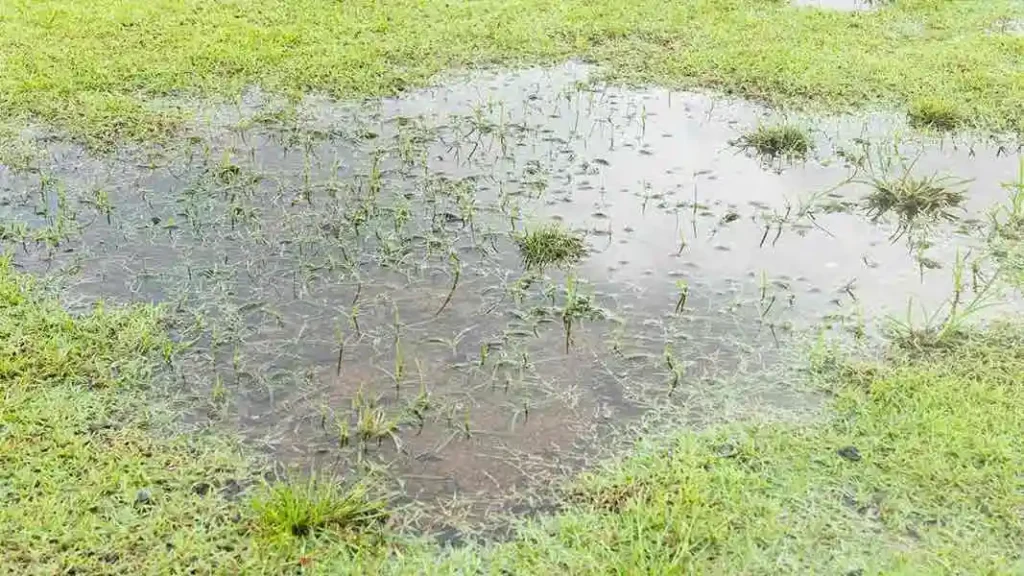
Standing Water After Rain
Puddles that remain for extended periods may indicate poor infiltration, inadequate surface drainage, or a low area.
A temporary puddle during an intense storm is not necessarily evidence of a major drainage problem.
Muddy Areas That Never Seem to Dry
Persistent mud can make a lawn difficult to use.
It may also indicate repeated runoff or a consistently saturated soil layer.
Thin or Yellowing Grass
Grass roots require oxygen.
When soil remains saturated for prolonged periods, roots may struggle to function normally.
The lawn may become yellow, thin, or weak.
Moss and Moisture-Tolerant Weeds
Moss and certain weeds may become more common in persistently damp areas.
However, moss can also be associated with shade, compaction, and other growing conditions.
Soil Erosion
Water flowing rapidly across the lawn can remove soil and expose roots.
Erosion may be especially noticeable on sloped properties.
Why Springdale Lawns Experience Drainage Problems
Springdale contains a variety of residential landscapes, from established neighborhoods to newer subdivisions.
Drainage conditions can vary significantly between properties.
Northwest Arkansas Soil Characteristics
Many soils in the region contain rocky or cherty material, with clay-rich layers occurring beneath the surface in some locations.
These deeper layers may slow water movement.
However, not every Springdale property has heavy clay soil.
Construction-Related Compaction
During residential development, grading equipment and construction vehicles can compact soil.
Some lawns are established over compacted fill with limited topsoil.
This can reduce infiltration and restrict root growth.
Changes in Property Grading
Driveway installation, patios, retaining walls, and landscape renovations can alter the way water moves.
A small grading change may redirect runoff toward an area that previously drained well.
Heavy Rainfall Events
Northwest Arkansas can experience intense thunderstorms that produce substantial rainfall over a short period.
Even a well-maintained lawn may temporarily collect water when rainfall exceeds the soil’s absorption capacity.
Soil Compaction and Restricted Water Movement
Compacted soil is one of the most common contributors to poor lawn drainage.
When soil particles are pressed tightly together, the spaces that normally hold air and water become smaller.
Heavy Foot Traffic
Repeated walking across the same areas can gradually compact the soil.
This is particularly common near gates, patios, and frequently used pathways.
Vehicles and Equipment
Parking vehicles on grass or operating heavy equipment can cause more significant compaction.
Construction Fill
Some newer homes have lawns installed over compacted material left from construction.
A thin layer of topsoil may hide the problem initially.
How Compaction Affects Grass
Compacted soil can limit root development, reduce infiltration, and increase surface runoff.
Our article on soil compaction and why your lawn won’t improve explains how these conditions affect turf health.
Low Spots and Uneven Lawn Grading
A lawn may have adequate soil permeability but still experience standing water because of its shape.
Water Collects in Depressions
Low areas naturally collect runoff from surrounding ground.
These depressions may develop through soil settling, construction, or previous landscape work.
Incorrect Slope Near the House
The ground around a home should generally direct surface water away from the foundation.
If the soil slopes toward the house, runoff may accumulate near walls or basement areas.
Settling Around Underground Utilities
Soil may settle over trenches used for utility installation.
This can create narrow depressions that collect water.
Identifying Grading Problems
Observe where water flows during rainfall from a safe location.
Look for areas where runoff becomes trapped.
Correcting grading may be necessary when surface water cannot reach an appropriate drainage outlet.
Major grading changes should be evaluated carefully to avoid directing water toward neighboring properties or structures.
Downspouts and Roof Runoff
Sometimes the drainage problem does not originate in the lawn itself.
Roof runoff can deliver a large amount of water to a concentrated area.
Downspouts Discharging Onto Grass
A downspout that empties directly into a small lawn section may overwhelm the soil.
Repeated saturation can weaken grass and create erosion.
Short Downspout Extensions
If water is released too close to the foundation, it may collect along the house.
Blocked Gutters
Clogged gutters can cause water to overflow in unintended locations.
Improving Roof Drainage
Downspout extensions or properly designed underground piping may help direct water to a suitable outlet.
Discharge locations should comply with local requirements and avoid creating problems for adjacent properties.
Overwatering and Irrigation Problems
Not every wet lawn is caused by rainfall.
Irrigation systems can contribute to poor drainage when they apply more water than the soil can absorb.
Excessive Watering Frequency
Watering too often can keep the root zone continuously wet.
This may reduce oxygen availability and encourage shallow rooting.
Sprinkler Coverage Overlap
Overlapping sprinkler patterns can apply too much water to certain sections.
Leaking Irrigation Components
A damaged underground line or malfunctioning sprinkler head may create an unusually wet area.
Adjusting Irrigation
Check soil moisture before watering.
Inspect sprinkler heads and look for leaks.
Watering schedules should reflect grass type, weather, soil conditions, and seasonal growth.
Core Aeration for Compacted Lawns
Core aeration is one potential solution when soil compaction is contributing to drainage problems.
How Core Aeration Works
A core aerator removes small plugs of soil from the lawn.
This creates openings that can temporarily improve air and water movement.
Benefits for Root Development
Reducing surface compaction may allow roots to grow more effectively.
It can also help water enter the soil.
Timing Depends on Grass Type
For Bermuda and Zoysia, core aeration is generally best performed during active warm-season growth.
For tall fescue, early fall is often a suitable period.
Aeration Has Limitations
Core aeration may not correct severe subsoil compaction, buried construction debris, or poor grading.
It also cannot solve problems caused by water flowing onto the property from another source.
Professional lawn aeration may help when compaction is a significant part of the drainage problem.
Improving Soil Structure and Organic Matter
Healthy soil structure helps support drainage and root growth.
However, soil improvement requires an understanding of existing conditions.
Soil Testing
The University of Arkansas Cooperative Extension Service provides soil-testing resources through county offices.
A standard fertility test can help identify nutrient and pH concerns.
However, it does not replace a physical evaluation of soil compaction, infiltration, or drainage.
Organic Matter
Appropriate organic matter can improve the structure of some soils over time.
The benefits depend on the existing soil and how amendments are incorporated.
Avoid Adding Sand Without Evaluation
Adding sand to heavy soil is not automatically a solution.
Small amounts may fail to improve drainage and can create an unfavorable soil mixture.
Topdressing
Light topdressing may help with minor surface irregularities or gradual soil improvement in some lawns.
However, topdressing alone will not correct a major drainage problem.
Surface Drains and Catch Basins
When water collects in a specific low area, a surface drainage system may be appropriate.
Catch Basins
A catch basin collects surface water through an inlet.
Water then moves through connected piping toward an approved discharge location.
Channel Drains
Channel drains are commonly used near driveways, patios, and other hard surfaces.
They can intercept runoff before it reaches unwanted areas.
Proper Placement
Drainage inlets should be installed where water naturally collects or flows.
Incorrect placement may provide little improvement.
Maintenance Requirements
Surface drains can collect leaves, sediment, and other debris.
Regular inspection and cleaning help maintain their function.
French Drains and Subsurface Drainage
A French drain is designed to collect and redirect water moving through the soil.
It typically consists of a perforated pipe surrounded by suitable drainage aggregate within a trench.
When French Drains May Help
French drains can be useful where subsurface water accumulates or moves through a particular area.
Why Proper Design Matters
Drainage systems require an appropriate slope, pipe configuration, and outlet.
Poorly designed systems may clog, remain ineffective, or redirect water into undesirable locations.
Surface Water Versus Subsurface Water
A French drain is not always the best solution for standing surface water.
In some situations, a surface inlet or grading correction is more appropriate.
Professional Evaluation
Before installing a subsurface drainage system, determine where the water originates and whether there is a suitable discharge location.
Underground utilities and local drainage requirements must also be considered.
Swales and Landscape Grading
A swale is a shallow, graded channel designed to move surface runoff across a property.
How Swales Work
Swales guide water along a controlled path toward an appropriate outlet.
They may be grass-covered or incorporated into landscape planting areas.
Benefits for Residential Properties
A properly designed swale can manage runoff without requiring extensive underground piping.
Maintaining Positive Drainage
The swale must have a suitable slope and remain free of obstructions.
Avoid Redirecting Water Toward Neighbors
Drainage improvements should not create new problems for adjacent properties.
Homeowners should confirm applicable municipal requirements before making significant changes.
Rain Gardens and Landscape Alternatives
Some properties may benefit from landscape features designed to manage runoff.
Rain Gardens
A rain garden is a planted depression designed to collect and infiltrate runoff temporarily.
It uses plants suited to the site’s moisture conditions.
Suitable Locations
Rain gardens work best where soil conditions and drainage patterns support their intended function.
They should be positioned appropriately relative to buildings, utilities, and other site features.
Native Plant Options
Plants adapted to Northwest Arkansas conditions may be suitable for rain gardens when selected according to sunlight, soil, and moisture requirements.
Limitations
A rain garden is not a substitute for correcting serious foundation drainage problems.
It also may not function well in locations with persistently saturated soil or inadequate infiltration.
How Poor Drainage Affects Different Grass Types
Different turfgrasses respond differently to prolonged wet conditions.
Bermuda Grass
Bermuda performs best in sunny locations with suitable drainage.
Prolonged saturation can restrict root function and contribute to thinning.
Zoysia Grass
Zoysia forms dense turf but can still experience stress in poorly drained areas.
Excess moisture may contribute to unfavorable conditions for certain diseases.
Tall Fescue
Tall fescue is commonly grown in Northwest Arkansas.
It may struggle where the root zone remains saturated for extended periods.
Choosing Grass for the Site
Grass selection should account for sunlight, drainage, soil conditions, and maintenance needs.
Our guide to the best grass types for Northwest Arkansas explains how different turf species perform in the region.
Lawn Diseases Associated With Excess Moisture
Persistently wet conditions can contribute to some lawn disease problems.
However, moisture alone does not confirm a fungal disease.
Reduced Root Health
Waterlogged soil limits oxygen availability.
Weak roots can make grass less resilient.
Fungal Disease Development
Certain fungal pathogens become more active under favorable moisture and temperature conditions.
Distinguishing Disease From Drainage Stress
Yellowing or thinning grass may result directly from poor root conditions rather than infection.
A proper diagnosis should consider both the turf and the surrounding environment.
Addressing the Underlying Cause
Applying a fungicide will not correct soil saturation or poor grading.
If drainage is contributing to disease pressure, improving water management is an important part of the solution.
Our lawn disease treatment services can help address confirmed turf disease concerns.
Restoring Grass After Drainage Improvements
Once the drainage problem has been corrected, damaged turf may need additional care.
Evaluate Whether Grass Is Still Alive
Some grass may recover when soil conditions improve.
Other areas may have lost enough roots or crowns to require replacement.
Repair Soil Damage
Drainage installation can disturb the soil.
Before restoring turf, ensure the area has a suitable soil profile and proper final grade.
Choose the Correct Repair Season
Bermuda and Zoysia are generally established or repaired during warm-season growth.
Tall fescue seeding is usually most successful during early fall in Northwest Arkansas.
Avoid Heavy Traffic During Recovery
Newly repaired areas should be protected from unnecessary foot traffic and equipment.
Monitor Watering Carefully
New grass requires appropriate moisture for establishment.
However, overwatering can recreate the same saturated conditions that contributed to the original problem.
Preventing Future Drainage Problems
Long-term drainage management involves regular observation and maintenance.
Inspect the Lawn After Heavy Rain
Look for changes in runoff patterns, erosion, and standing water.
Maintain Gutters and Downspouts
Keep gutters clear and ensure downspouts discharge appropriately.
Avoid Unnecessary Soil Compaction
Limit vehicle traffic and heavy equipment use on turf.
Monitor Irrigation
Adjust watering according to weather and soil moisture.
Keep Drainage Outlets Clear
Remove leaves and debris from surface drains and other drainage structures.
Address Small Problems Early
Minor settling, erosion, or blocked drainage paths may be easier to correct before they become larger problems.
Frequently Asked Questions
Why does water stand in my Springdale lawn after rain?
Standing water may result from compacted soil, low spots, poor grading, clay-rich subsoil, or concentrated runoff from roofs and paved surfaces. Identifying where the water originates helps determine the appropriate solution.
Will aerating my lawn fix poor drainage?
Core aeration can help when surface soil compaction is restricting water infiltration. However, it may not solve drainage problems caused by incorrect grading, severe subsoil compaction, or runoff entering the property.
Is a French drain the best solution for a wet lawn?
Not always. French drains are generally used to collect and redirect subsurface water. Surface drains, swales, or grading corrections may be more suitable when water is pooling on top of the lawn.
Can too much water kill grass?
Yes. Prolonged soil saturation reduces oxygen availability around the roots. This can weaken grass, cause yellowing or thinning, and eventually lead to turf loss when conditions remain unfavorable.
How long should puddles remain after heavy rain?
Some temporary pooling can occur during intense storms. However, water that remains for extended periods after surrounding areas have dried may indicate a drainage problem. The significance depends on rainfall amount, soil conditions, and the location of the water.
Final Thoughts
Poor lawn drainage is more than an inconvenience.
When water repeatedly collects in the same areas, it can weaken grass, contribute to soil compaction, encourage certain weeds, and make the yard difficult to use.
For homeowners in Springdale, Arkansas, the cause may involve compacted construction fill, shallow or rocky soil, clay-rich subsoil, uneven grading, or concentrated runoff.
The right solution depends on understanding how water moves across and through the property.
Some lawns improve with irrigation adjustments or core aeration.
Others require grading corrections, surface drains, or professionally designed subsurface drainage systems.
At 1st Impressions Lawn & Tree, we encourage homeowners throughout Springdale, Rogers, Bentonville, Fayetteville, and surrounding Northwest Arkansas communities to address drainage problems before investing in extensive lawn repairs.
Correcting the underlying water problem gives healthy grass a better opportunity to establish and thrive.
With appropriate drainage improvements, soil management, and seasonal lawn care, homeowners can create a more usable and resilient landscape.