Introduction
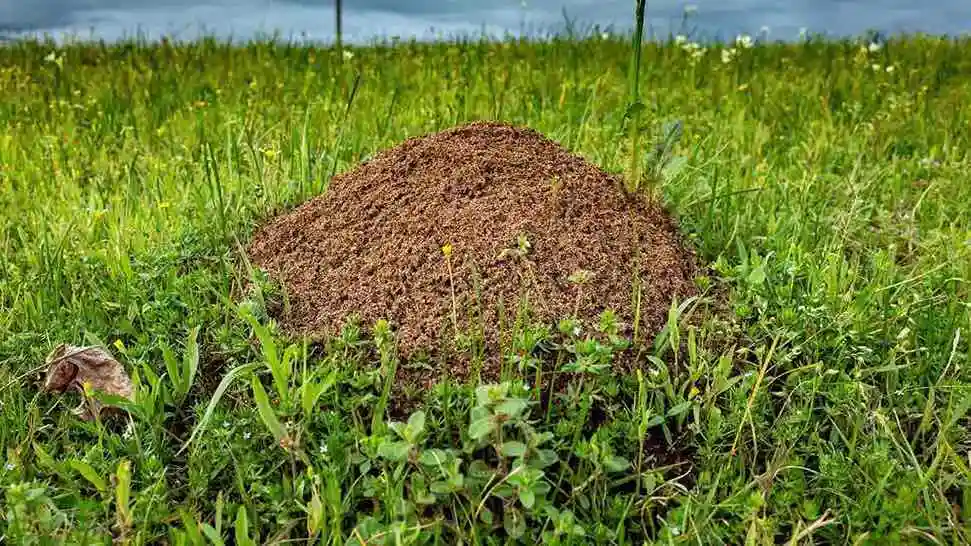
You walk outside to mow your lawn and notice a small mound of loose soil that was not there a few days earlier.
A week later, another mound appears near the driveway.
It is natural to wonder whether fire ants have moved into your yard.
Ants are common in Arkansas landscapes, but not every ant colony presents the same concerns. Some species are relatively harmless, while imported fire ants can deliver painful stings and become difficult to manage once established.
For homeowners in Northwest Arkansas, identification is particularly important.
Fire ants are more widely established in warmer parts of Arkansas, and cold winters can limit their survival farther north. However, changing weather conditions, transported soil, nursery materials, and localized favorable environments can create opportunities for colonies to appear outside their most established range.
At 1st Impressions Lawn & Tree, we encourage homeowners to identify the insect before choosing a treatment.
Understanding why mounds appear, what they indicate, and how ants interact with the lawn helps avoid unnecessary applications and supports more effective pest management.
What Are Fire Ants?
Imported fire ants are aggressive, colony-forming ants known for their painful stings.
The red imported fire ant, Solenopsis invicta, is an invasive species that has spread across much of the southern United States.
Unlike many native ants, imported fire ants may respond aggressively when their nest is disturbed.
A colony can contain thousands of workers, developing brood, and one or more reproductive queens.
What Does a Fire Ant Look Like?
Imported fire ant workers are typically reddish-brown to dark brown and vary in size within the same colony.
However, appearance alone is not always enough for reliable identification.
Several native ant species can resemble fire ants.
For this reason, homeowners should avoid assuming that every reddish ant or mound in the yard belongs to an imported fire ant colony.
Are Fire Ants Common in Northwest Arkansas?
Fire ant activity varies considerably across Arkansas.
The state’s warmer southern regions generally provide more favorable conditions for imported fire ants than the colder Ozark Plateau.
Northwest Arkansas experiences winter freezes that can reduce colony survival.
Cold Weather Can Limit Colonies
Extended freezing conditions can affect colonies, particularly when cold penetrates deeply into the soil.
However, some colonies may survive in protected locations or during relatively mild winters.
A mound discovered in Bentonville or Rogers should therefore be identified rather than automatically labeled as a fire ant nest.
Disturbed Soil Can Attract Ant Activity
New subdivisions, landscaped properties, and recently disturbed soil can provide nesting opportunities for various ant species.
This is relevant in growing Northwest Arkansas communities where grading, construction, and landscaping frequently change soil conditions.
Why Do Ant Mounds Suddenly Appear?
Ant mounds may seem to appear overnight, but the colony often existed before the mound became noticeable.
Worker ants move soil as they expand tunnels, regulate nesting conditions, and respond to changes in moisture.
Rainfall Can Make Mounds More Visible
After rain, ants may move soil to the surface while adjusting their nest.
Loose soil becomes easier to notice against surrounding grass.
This does not necessarily mean a new colony appeared immediately after the storm.
Warm Weather Increases Activity
Ants are generally more active when soil temperatures are favorable.
During warm spring and summer conditions, workers may forage, expand tunnels, and maintain the colony more actively.
Soil Disturbance Can Change Nesting Patterns
Construction, landscaping, irrigation work, and other disturbances may alter where ants establish or maintain nests.
A lawn that recently received new soil or landscape materials may experience changes in insect activity.
Where Do Fire Ants Build Their Mounds?
Fire ants may establish nests in open, sunny locations where soil conditions support colony development.
Potential nesting areas include:
- Lawn edges
- Open grassy areas
- Landscape beds
- Areas beside sidewalks
- Driveway borders
- Utility boxes
- Disturbed ground
- Locations near irrigation systems
Why Mounds Appear Along Sidewalks
Pavement edges can create warmer microclimates and differences in soil moisture.
These conditions may make certain locations attractive for nesting.
In Northwest Arkansas, where some properties have rocky topsoil over compacted clay, ants may concentrate activity in areas where digging is easier.
However, mound location alone cannot confirm the species.
How Can You Tell If a Mound Belongs to Fire Ants?
Imported fire ant mounds often consist of loose, finely worked soil.
They may not have an obvious central opening at the top.
Workers frequently use underground entrances and exits around the mound.
Do Not Disturb the Mound With Your Hands
Fire ants may respond quickly when a colony is disturbed.
Avoid touching, kicking, or stepping on a suspected mound.
Keep children and pets away until the insect has been identified.
Identification Matters
Native field ants and other soil-nesting species can also create noticeable mounds.
A photograph of the ants, taken without disturbing the colony, may help with initial identification.
For uncertain cases, local Cooperative Extension resources or a qualified pest professional can assist.
Can Fire Ants Damage Your Lawn?
Fire ants are primarily a nuisance and safety concern, although their nesting activity can interfere with lawn maintenance.
Large mounds may create uneven surfaces that affect mowing.
Mounds Can Interfere With Equipment
Running a mower over a large mound can scatter soil and disturb the colony.
Repeated mound formation may also make certain areas difficult to maintain evenly.
Ant Activity Does Not Always Mean Grass Is Dying
Ants are not generally responsible for the same type of root-feeding damage caused by white grubs.
If grass is turning brown around a mound, other conditions may also be involved.
These include:
- Drought stress
- Soil compaction
- Poor irrigation coverage
- Excess moisture
- Turf disease
- Root damage from other insects
Homeowners should avoid treating the entire lawn for ants simply because a nearby patch of grass is unhealthy.
How Are Fire Ants Different From White Grubs?
Fire ants and white grubs affect lawns in different ways.
Fire ants are social insects that build colonies and may create visible soil mounds.
White grubs are beetle larvae that live beneath the soil surface and feed on grass roots.
Grubs Can Cause Root Damage
Japanese beetle and June beetle larvae are examples of white grubs that may damage turf.
Affected grass may wilt, turn brown, or pull away from the soil because its roots have been eaten.
Our grub control services address a different pest problem from ant mound management.
Correct identification helps prevent applying a treatment that does not address the actual cause.
When Are Fire Ants Most Active?
Fire ant activity is influenced by temperature, soil moisture, and colony conditions.
Spring
As soil temperatures rise, surviving colonies may become more active.
Mounds may become easier to notice following rainfall.
Summer
Warm conditions can support colony activity, although extreme heat may cause ants to forage during cooler parts of the day.
Fall
Moderate temperatures can provide favorable foraging conditions.
This may be an important treatment period in locations where imported fire ants are established.
Winter
Cold weather generally reduces aboveground activity.
In Northwest Arkansas, prolonged freezing conditions may also affect colony survival.
However, the absence of visible activity during winter does not always confirm that a colony is gone.
Can Heavy Rain Get Rid of Fire Ants?
Rain does not reliably eliminate established colonies.
Ants can respond to changing moisture conditions by moving within the nest or relocating portions of the colony.
Flooded Areas May Show Temporary Changes
After heavy rainfall, some mounds may disappear or become less visible.
Others may appear in new locations.
This can create the impression that ants have moved suddenly.
Drainage Problems Can Affect the Entire Lawn
Northwest Arkansas properties with dense clay subsoil may experience slow drainage after heavy storms.
Standing water can stress turf, contribute to soil compaction, and create conditions favorable for certain lawn diseases.
If your lawn frequently becomes saturated, our article on why your lawn looks worse after it rains explains several possible causes.
Should You Treat Every Ant Mound?
Not necessarily.
Many native ant species play useful roles in soil ecosystems.
They can contribute to soil mixing and serve as predators or prey within the landscape.
Treating every ant mound without identification may unnecessarily affect beneficial insects.
Prioritize Safety and Species Identification
Treatment is more likely to be warranted when imported fire ants are confirmed in areas used by children, pets, or people who may be vulnerable to stings.
A qualified professional can help determine whether control is necessary.
Avoid Unnecessary Broad Applications
Applying insecticides without confirming the pest may expose the lawn and surrounding environment to unnecessary chemicals.
The appropriate treatment depends on the species, location, severity, and product label.
What Treatments Are Used for Fire Ants?
Fire ant management commonly involves products specifically labeled for imported fire ant control.
Two general approaches include bait treatments and individual mound treatments.
Fire Ant Baits
Baits contain an attractive food material combined with an active ingredient.
Foraging workers collect the bait and carry it back to the colony.
Successful treatment depends on the product, weather, ant activity, and proper application.
Baits should be applied only according to label directions.
Individual Mound Treatments
Some products are designed to treat specific colonies.
These may be appropriate when a mound presents an immediate concern in a frequently used area.
However, disturbing a colony or applying an unsuitable product can reduce effectiveness or cause ants to relocate.
Why Identification Comes First
Treatments intended for imported fire ants may not be appropriate for every ant species.
Homeowners should confirm the insect and select products registered for their location and intended use.
Can You Prevent Fire Ant Mounds From Returning?
No lawn maintenance program can guarantee that ants will never establish another colony.
However, regular monitoring and appropriate pest management can help reduce recurring problems.
Monitor High-Traffic Areas
Pay attention to play areas, patios, walkways, and other locations where accidental contact could occur.
Maintain Healthy Turf
Healthy grass does not completely prevent ant colonies, but consistent lawn maintenance can help make changes in the landscape easier to notice.
Proper mowing, irrigation, and soil management also support overall turf health.
Address Underlying Lawn Problems Separately
If your lawn has weeds, thin grass, or compacted soil, those conditions should be evaluated independently of ant activity.
Our guide on how to get a thicker lawn explains why soil conditions, sunlight, grass type, and maintenance practices all influence turf density.
Why Northwest Arkansas Soil Conditions Matter
Northwest Arkansas soils vary considerably between properties.
Some lawns have shallow, rocky, or cherty soil over clay-rich layers.
Others contain compacted fill from residential construction.
These conditions affect drainage, moisture retention, and the ease with which insects can move soil.
Compacted Soil Can Create Other Lawn Problems
Ant mounds may be visible in the same yard where grass struggles with compaction.
However, the presence of ants does not prove that compaction caused the infestation.
Homeowners experiencing persistent turf problems may benefit from understanding soil compaction and why lawns fail to improve.
Soil Testing Helps With Turf Health, Not Ant Identification
Soil testing can identify nutrient and pH concerns.
The University of Arkansas Cooperative Extension Service offers soil-testing resources through county offices.
These results can guide fertilization and lime decisions, but they do not determine whether a mound contains fire ants.
Different lawn problems require different diagnostic approaches.
Frequently Asked Questions
Are fire ants found in Bentonville and Rogers, Arkansas?
Imported fire ants are established in warmer parts of Arkansas, but colder Northwest Arkansas conditions can limit their persistence. Suspected colonies in Bentonville or Rogers should be identified because several native ant species also create soil mounds.
Why do ant mounds appear after heavy rain?
Rain changes soil moisture and may cause ants to move soil or adjust their nesting areas. This can make existing colonies more visible. Rainfall does not necessarily create a new colony or eliminate an established one.
Do fire ants eat grass roots?
Fire ants are not typically responsible for the root-feeding damage associated with white grubs. Their mounds may interfere with mowing, but brown or dying grass should be evaluated for other causes as well.
What is the best time to treat fire ants?
Treatment is generally most effective when ants are actively foraging and conditions match the product label. Spring and fall can provide favorable conditions in established fire ant areas, but timing depends on weather, location, and the treatment selected.
Should I pour boiling water on a fire ant mound?
Boiling water can cause serious burns, damage surrounding turf, and may not eliminate the entire colony. Properly labeled products and professional identification are generally safer and more reliable approaches.
Final Thoughts
Finding an unfamiliar mound in your lawn can be frustrating, particularly when it appears near a sidewalk, patio, or play area.
However, not every mound in Northwest Arkansas belongs to imported fire ants.
The region’s colder winters, varied soils, and native ant populations make accurate identification especially important.
When imported fire ants are confirmed, treatment should focus on safety, colony management, and proper product use rather than applying insecticides indiscriminately.
At 1st Impressions Lawn & Tree, we encourage homeowners throughout Rogers, Bentonville, Springdale, Fayetteville, and surrounding Northwest Arkansas communities to look at the complete condition of their lawns before deciding on a treatment.
Whether the concern involves insect activity, thinning turf, poor drainage, or compacted soil, understanding the underlying cause is the first step toward choosing the right solution.
A healthier lawn starts with informed decisions, appropriate seasonal care, and attention to the conditions that make each Northwest Arkansas property unique.